
SCIMITAR CLASS NX-2901
Starship Prototype
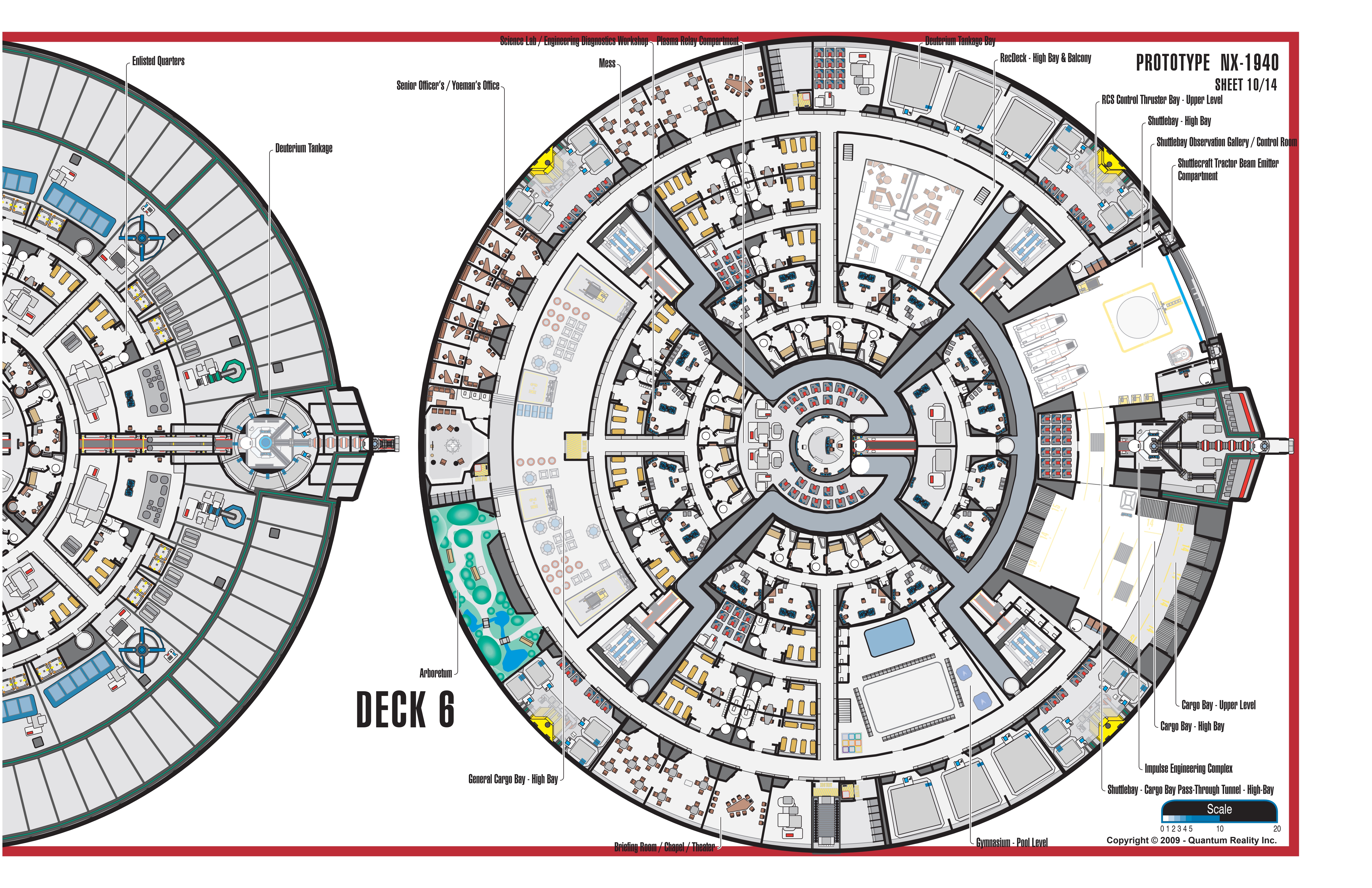
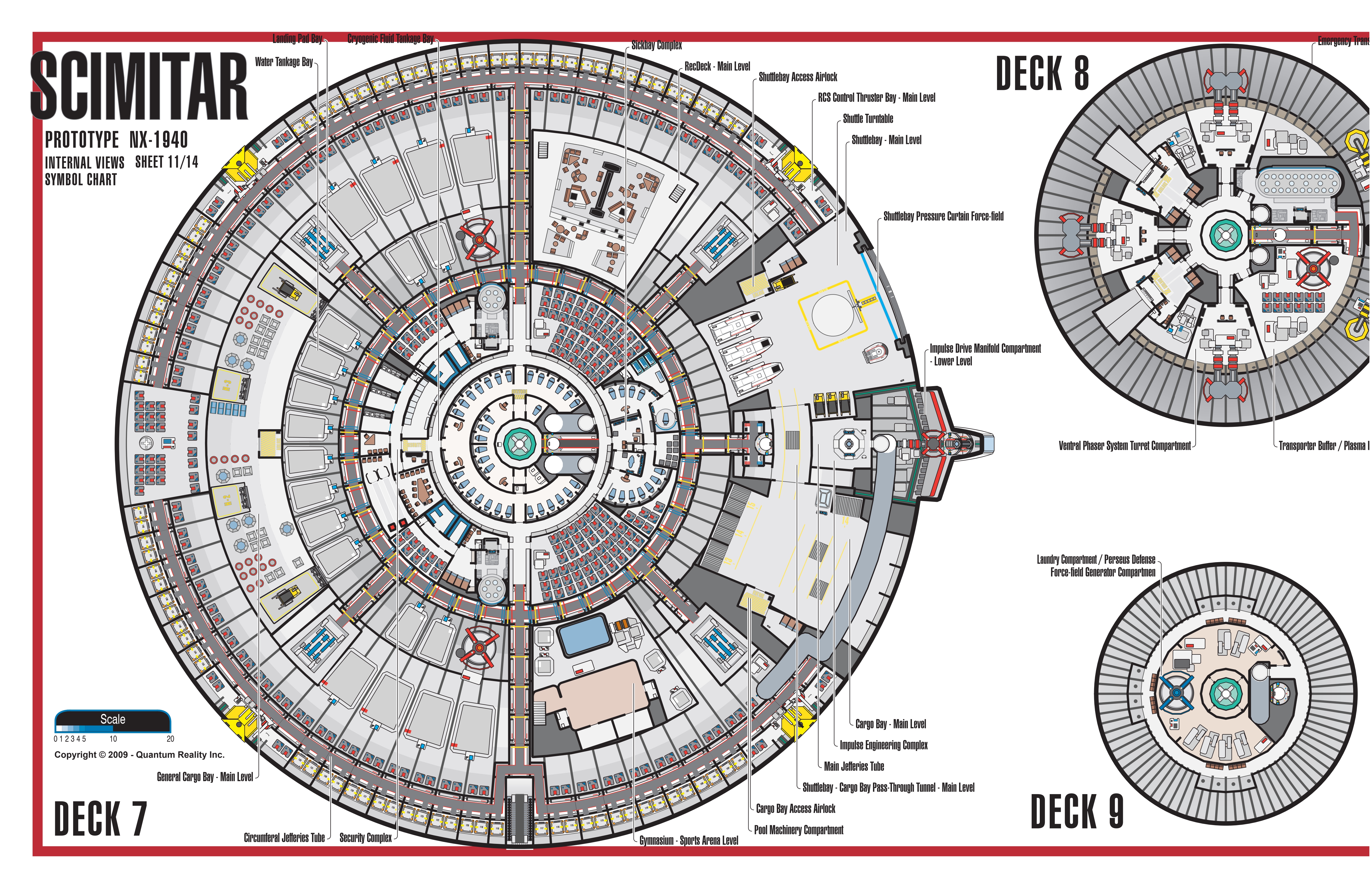
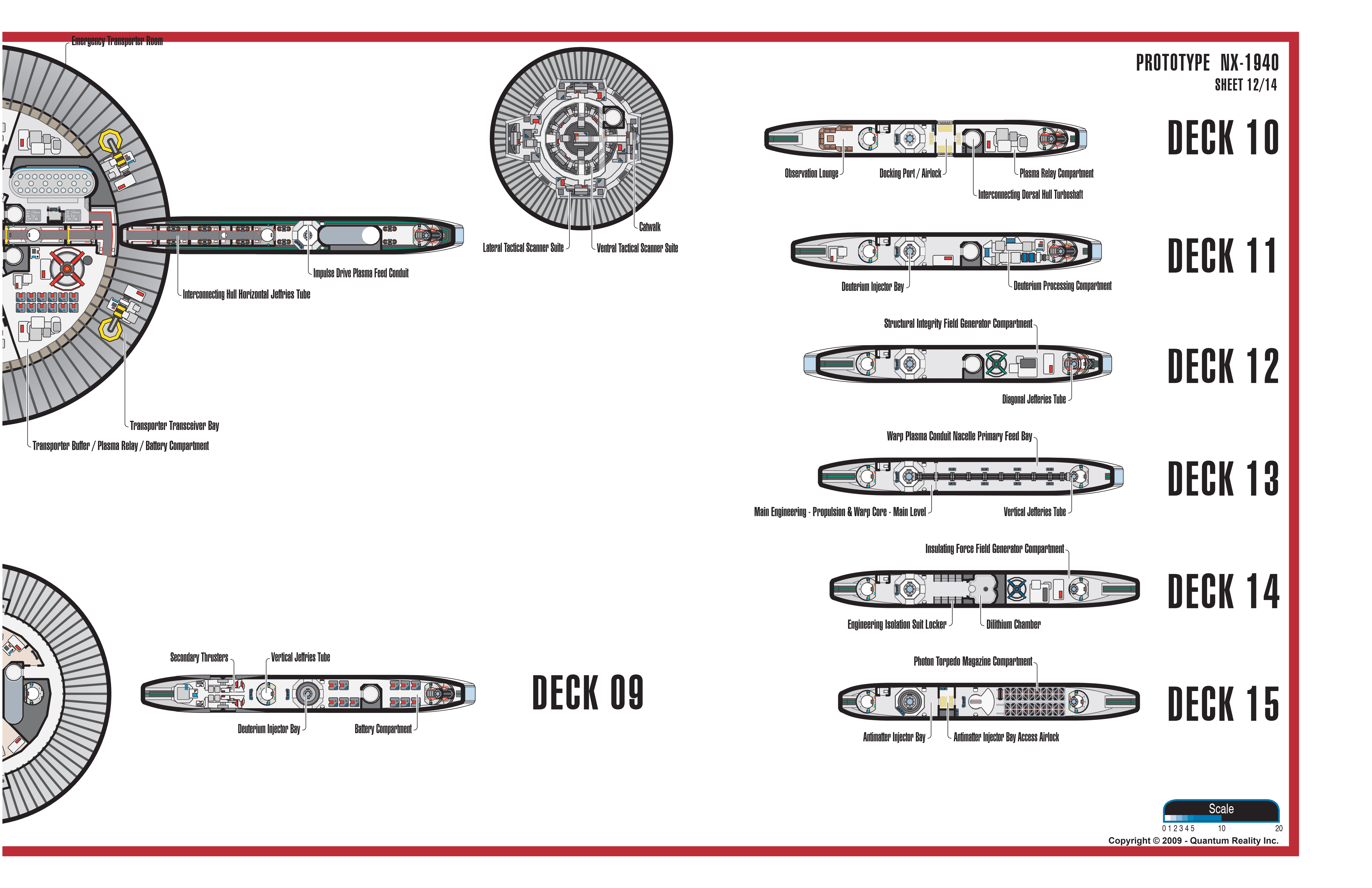
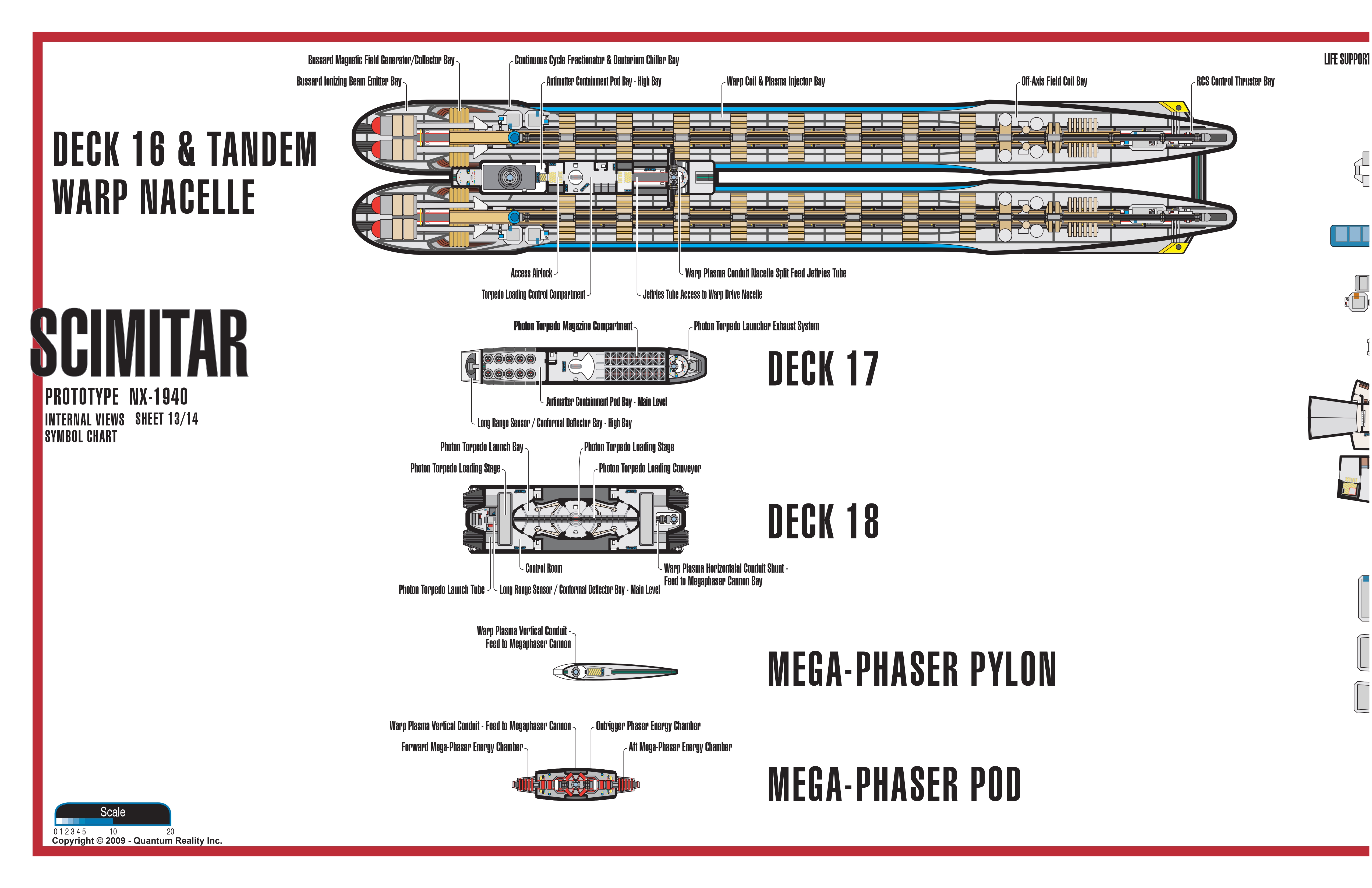
External Blueprints & Deck Plans
Starship Prototype
External Blueprints & Deck Plans
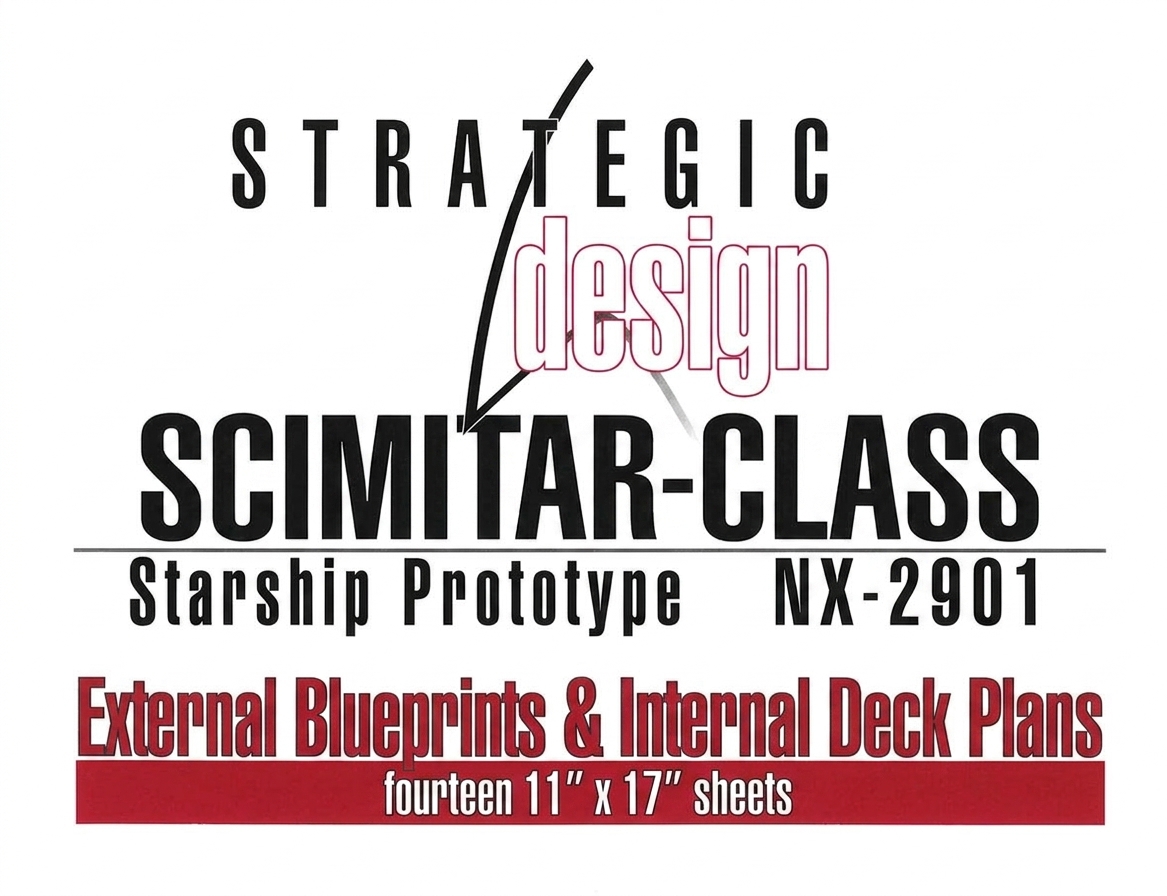
Design Team: David Schmidt, Tim Palgut
Copyright: 2009
DESIGN HISTORY:
Creating a Fast Destroyer
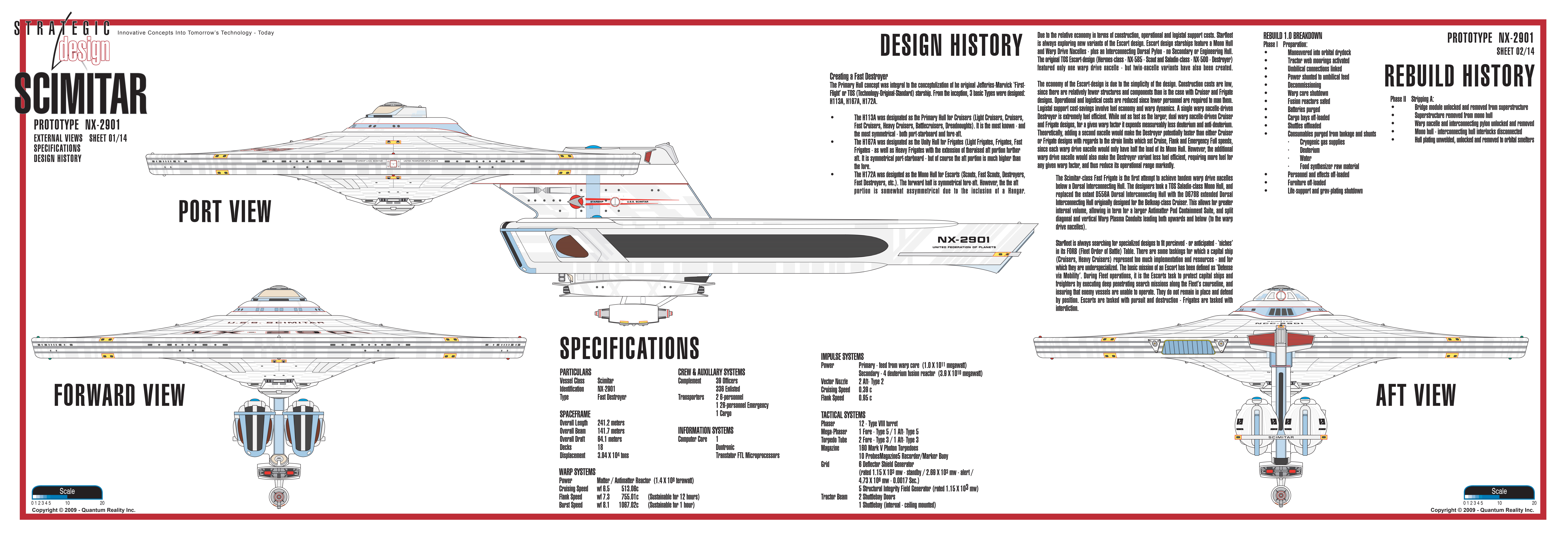
The Primary Hull concept was integral to the conceptualization of the original Jefferies-Marvick 'First-Flight' or TOS (Technology Original Standard) starship. From its inception, 3 basic Types were designed: H113A, H187A, H172A.
The H113A was designated as the Primary Hull for Cruisers (Light Cruisers, Cruisers, Fast Cruisers, Heavy Cruisers, Battlecruisers, Dreadnoughts). It is the most known - and the most symmetrical - both port-starboard and fore-aft.
The H187A was designated as the Utility Hull for Frigates (Light Frigates, Frigates, Fast Frigates - as well as Heavy Frigates with the extension of the raised aft portion further aft). It is symmetrical port-starboard - but of course the aft portion is much higher than the fore.
The H172A was designed as the Mono Hull for Escorts (Scouts, Fast Scouts, Destroyers, Fast Destroyers, etc.). The forward half is symmetrical fore-aft, however, the aft portion is somewhat assymmetrical due to the inclusion of a Hangar.
Due to the relative economy in terms of construction, operational and logistical support costs, Starfleet is always exploring new variants of the Escort design. Escort design starships feature a Mono Hull and Warp Drive Nacelles - plus an interconnecting Dorsal Pylon - no Secondary or Engineering Hull. The original TOS Escort-design (Hermes-class - NX-505 - Scout and Saladin-class - NX-500 - Destroyer) featured only one warp drive nacelle - but twin-nacelle variants have also been created.
The economy of the Escort design is due to the simplicity of the design. Construction costs are low, since there are relatively fewer structures and components than is the case with Cruiser and Frigate designs. Operational and logistical costs are reduced since fewer personnel are required to man them. Logistical support cost-savings involve fuel economy and warp dynamics. A single warp nacelle-driven Destroyer is extremely fuel efficient. While not as fast as the larger, dual warp nacelle-driven Cruiser and Frigate designs, for a given warp factor it expends substantially less deuterium and anti-deuterium. Theoretically, adding a second nacelle would make the Destroyer potentially faster than either Cruiser or Frigate designs with regards to the strain limits which set Cruise, Flank and Emergency Full speeds, since each warp drive nacelle would only have half the load of its Mono Hull. However, the additional warp drive nacelle would also make the Destroyer variant less fuel efficient, requiring more fuel for any given warp factor, and thus reduce its operational range markedly.
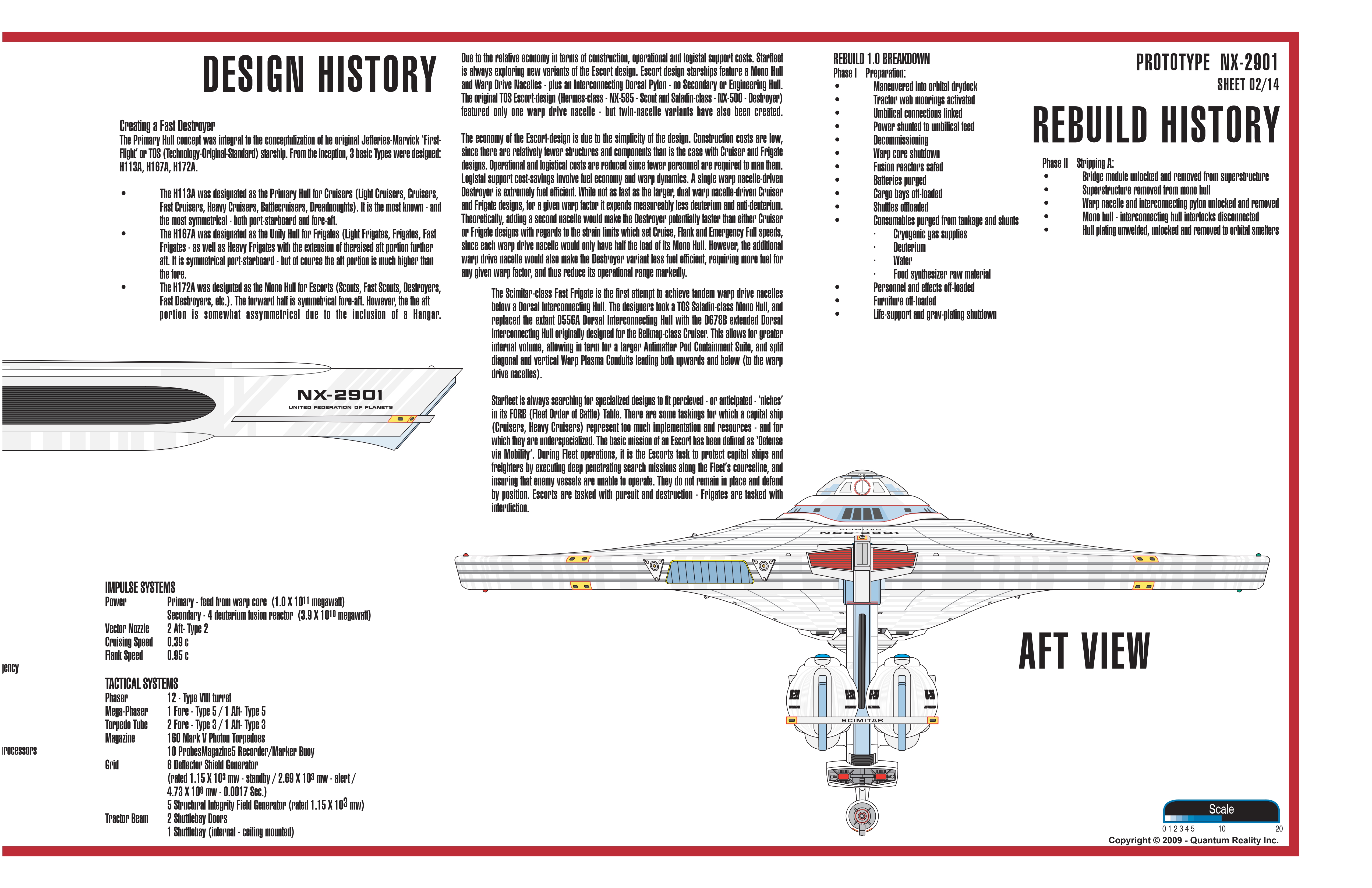
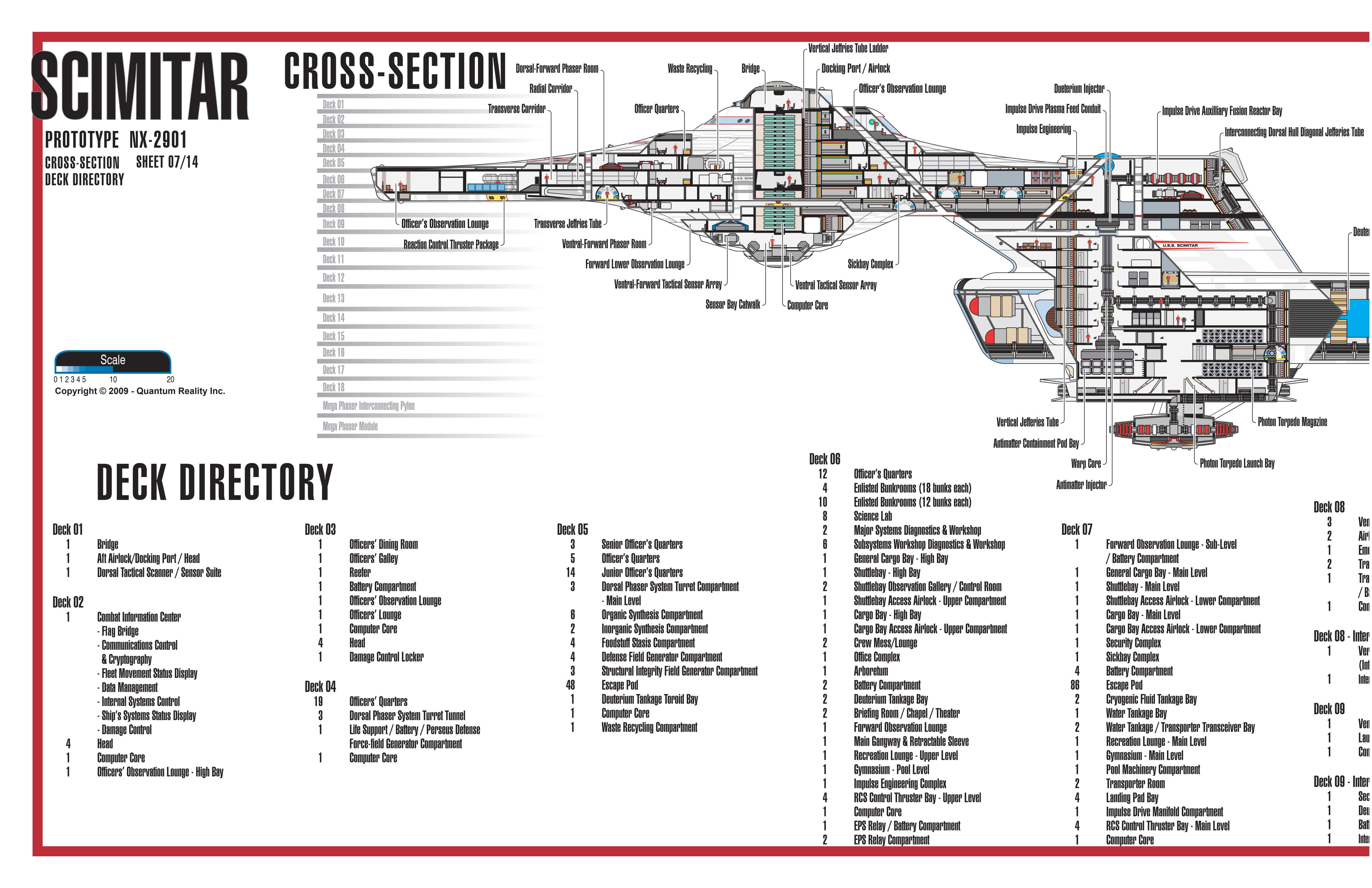
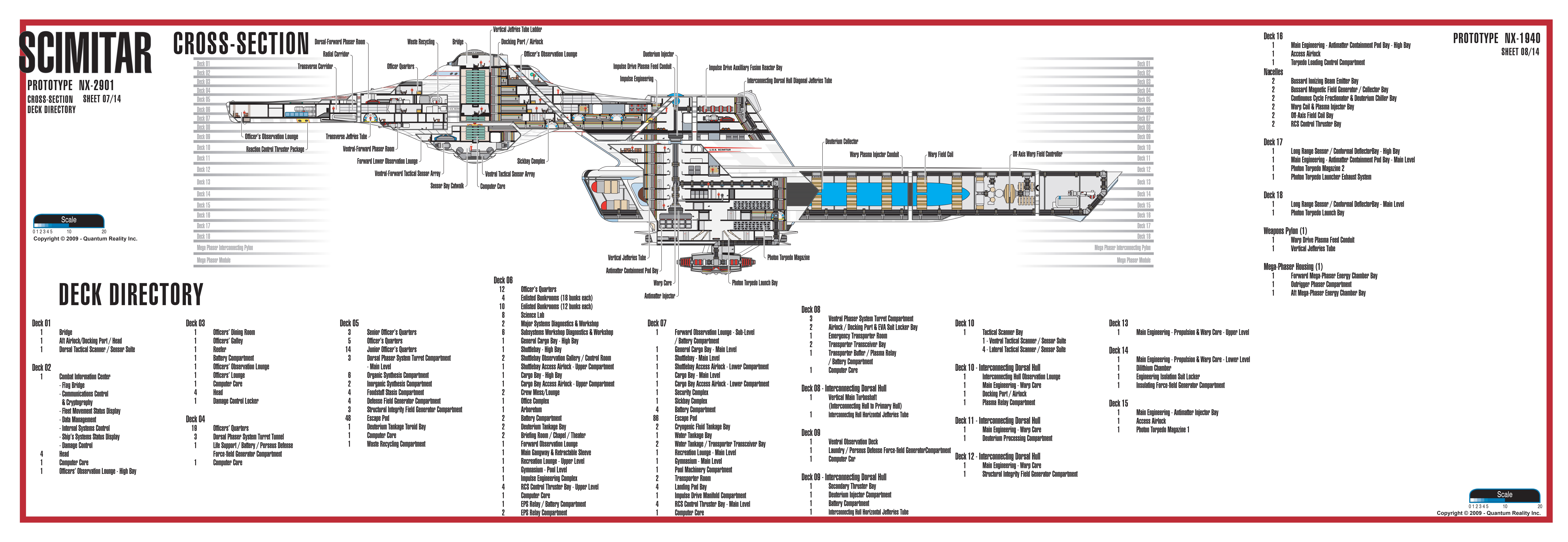
The Scimitar-class Fast Frigate is the first attempt to achieve tandem warp drive nacelles below a Dorsal Interconnecting Hull. The designers took a TOS Saladin-class Mono Hull, and replaced the extant D550A Dorsal Interconnecting Hull with the D6703 extended Dorsal Interconnecting Hull originally designed for the Belknap-class Cruiser. This allows for greater internal volume, allowing in turn for a larger Antimatter Pod Containment Suite, and split diagonal and vertical Warp Plasma Conduits leading both upwards and below (to the warp drive nacelles).
Starfleet is always searching for specialized designs to fit perceived - or anticipated - 'niches' in its FORB (Fleet Order of Battle) Table. There are some taskings for which a capital ship (Cruisers, Heavy Cruisers) represent too much implementation and resources - and for which they are underspecialized. The basic mission of an Escort has been defined as 'Defense via Mobility'. During Fleet operations, it is the Escorts task to protect capital ships and freighters by executing deep penetrating search missions along the Fleet's courseline, and insuring that enemy vessels are unable to operate. They do not remain in place and defend by position. Escorts are tasked with pursuit and destruction - Frigates are tasked with interdiction.
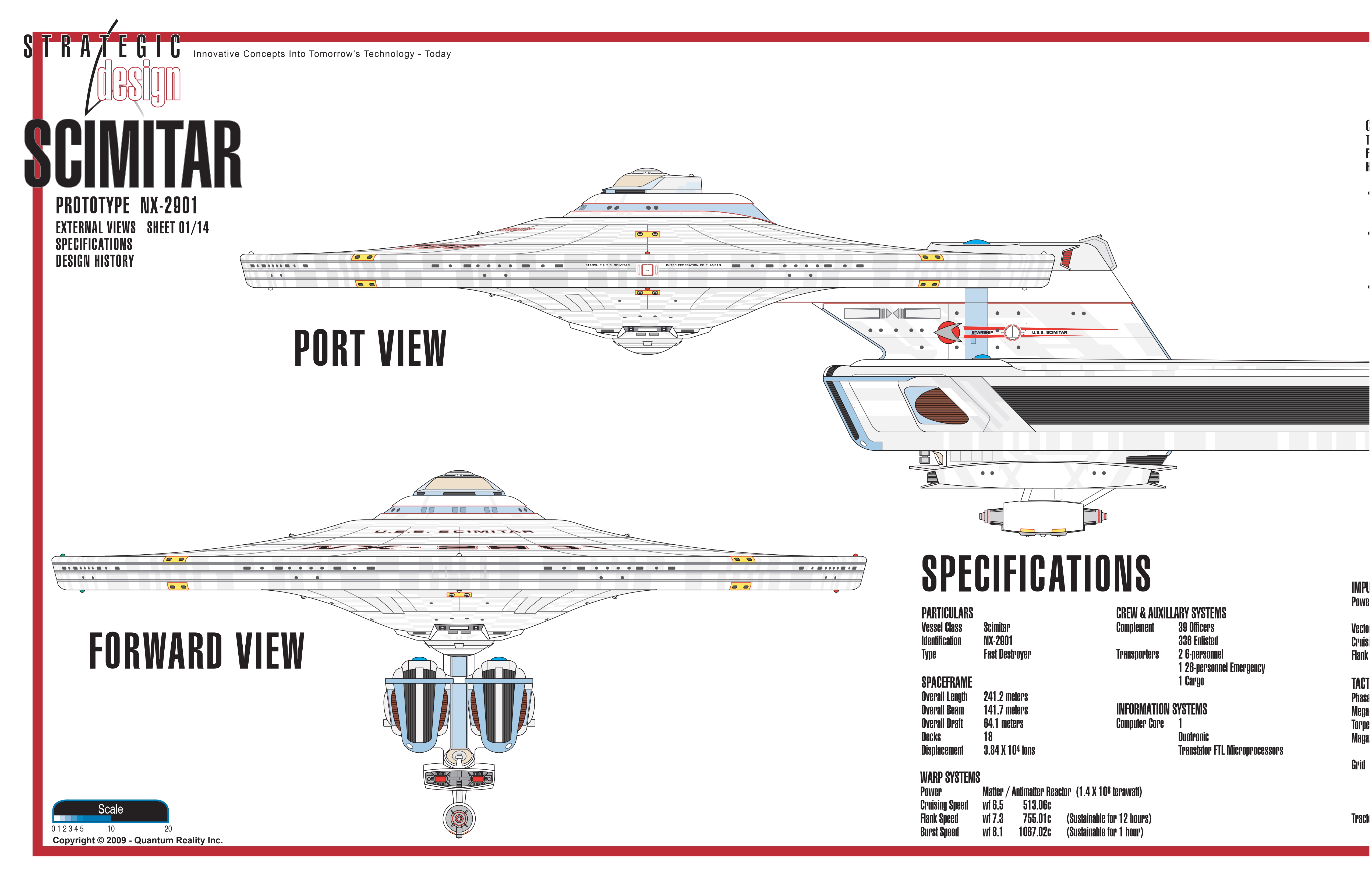

Download the PDF (24mb)
- View more Star Trek Blueprints and Schematics -