There are 13 active users currently online.
Comments
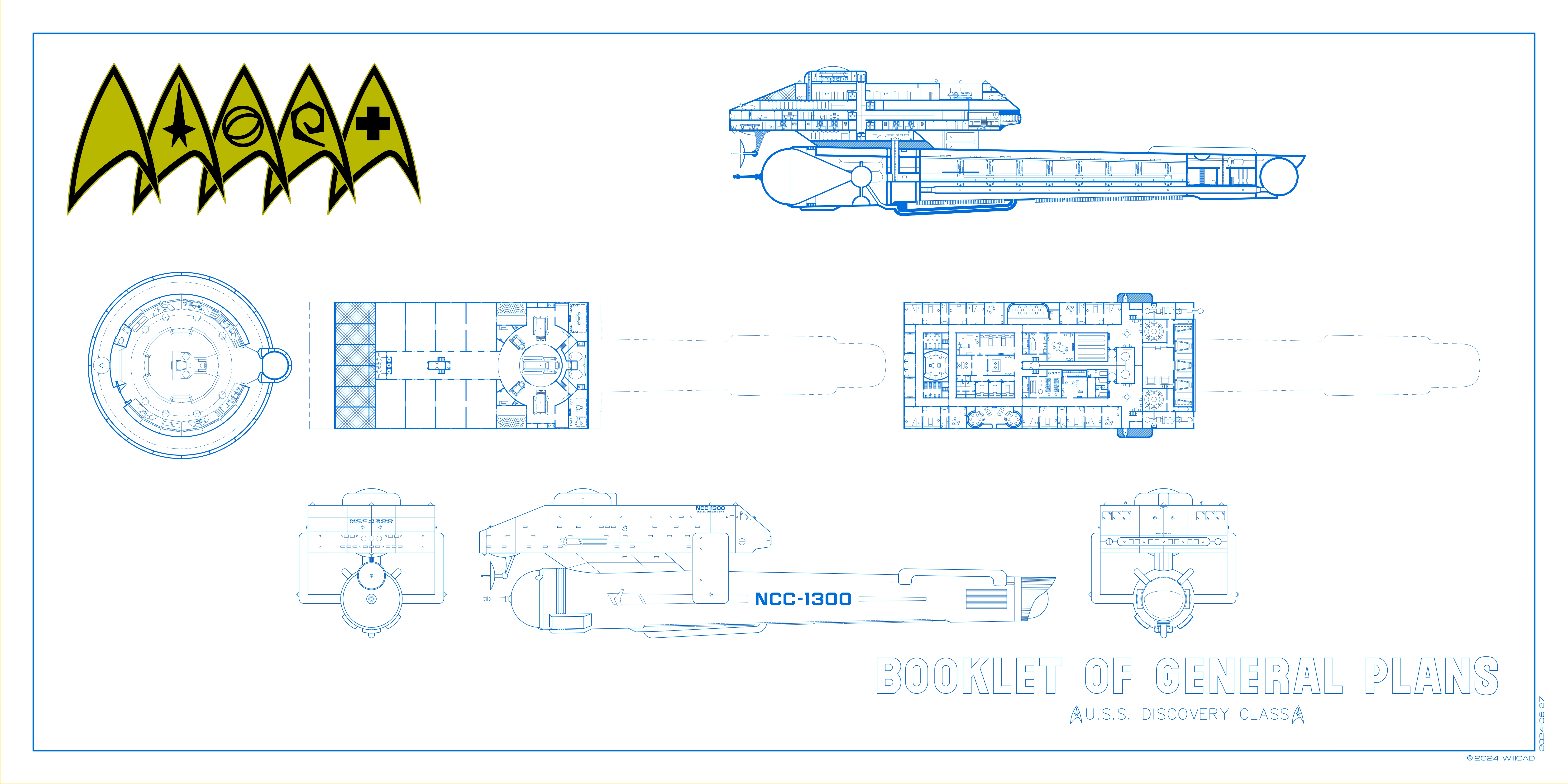
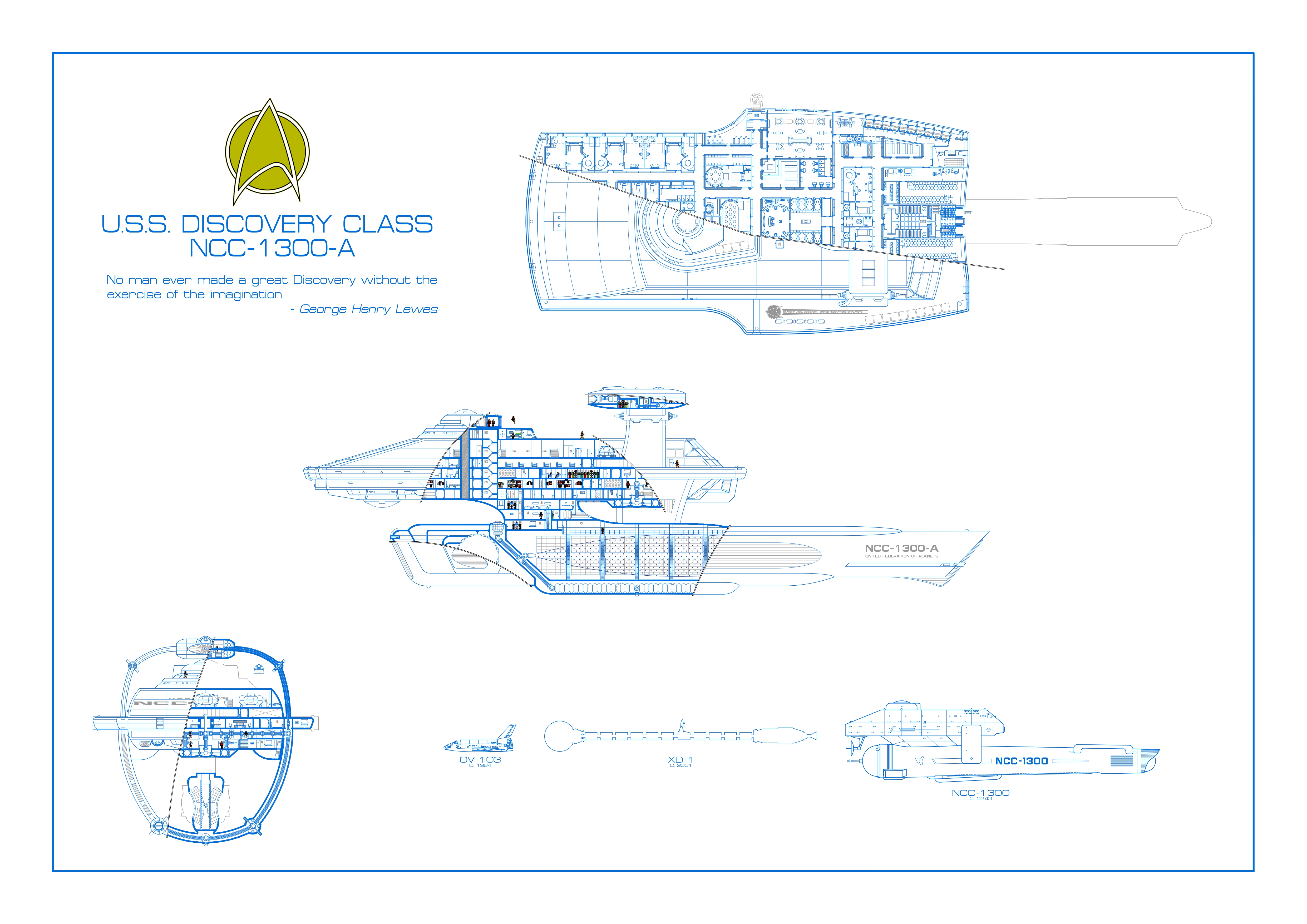
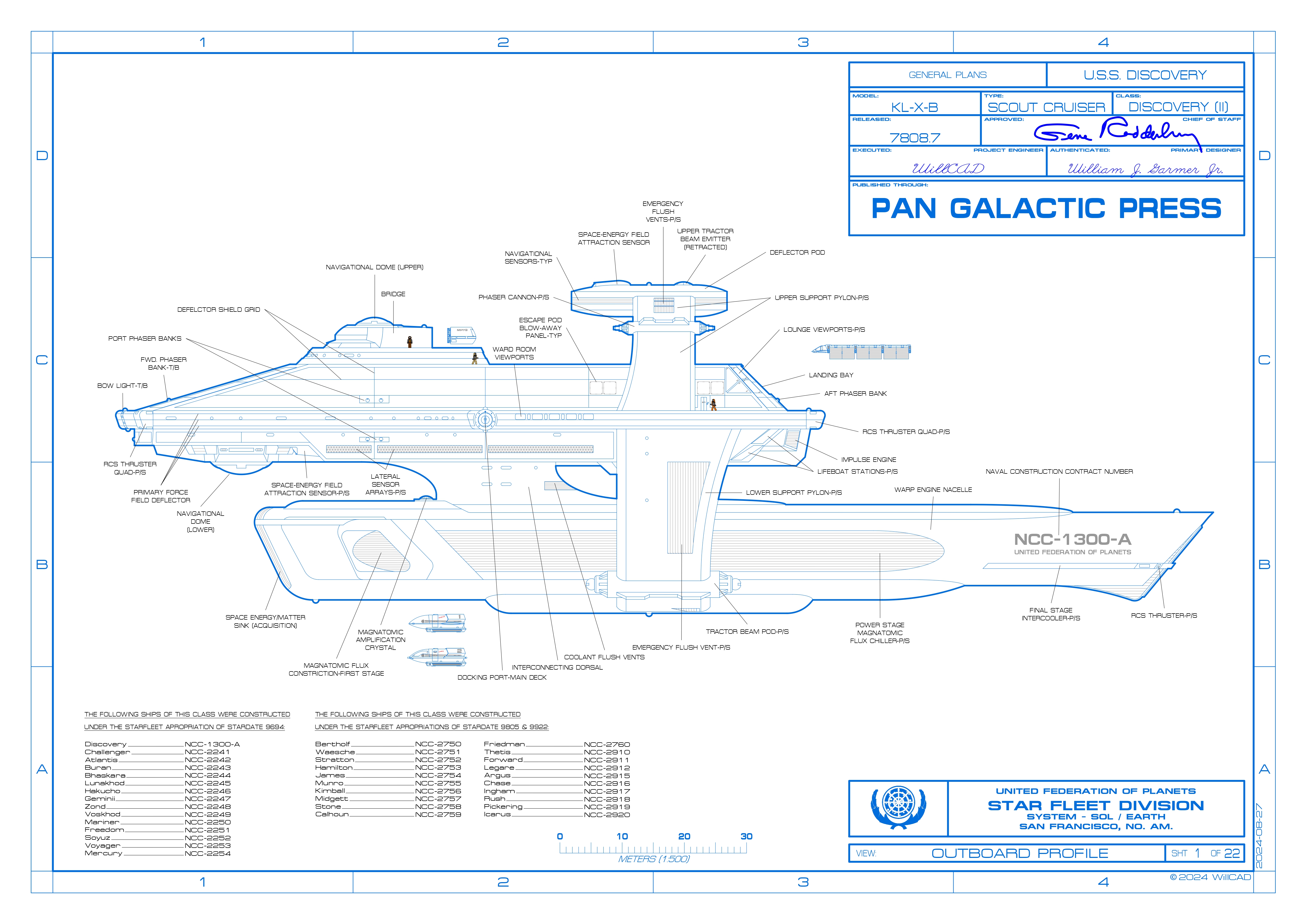
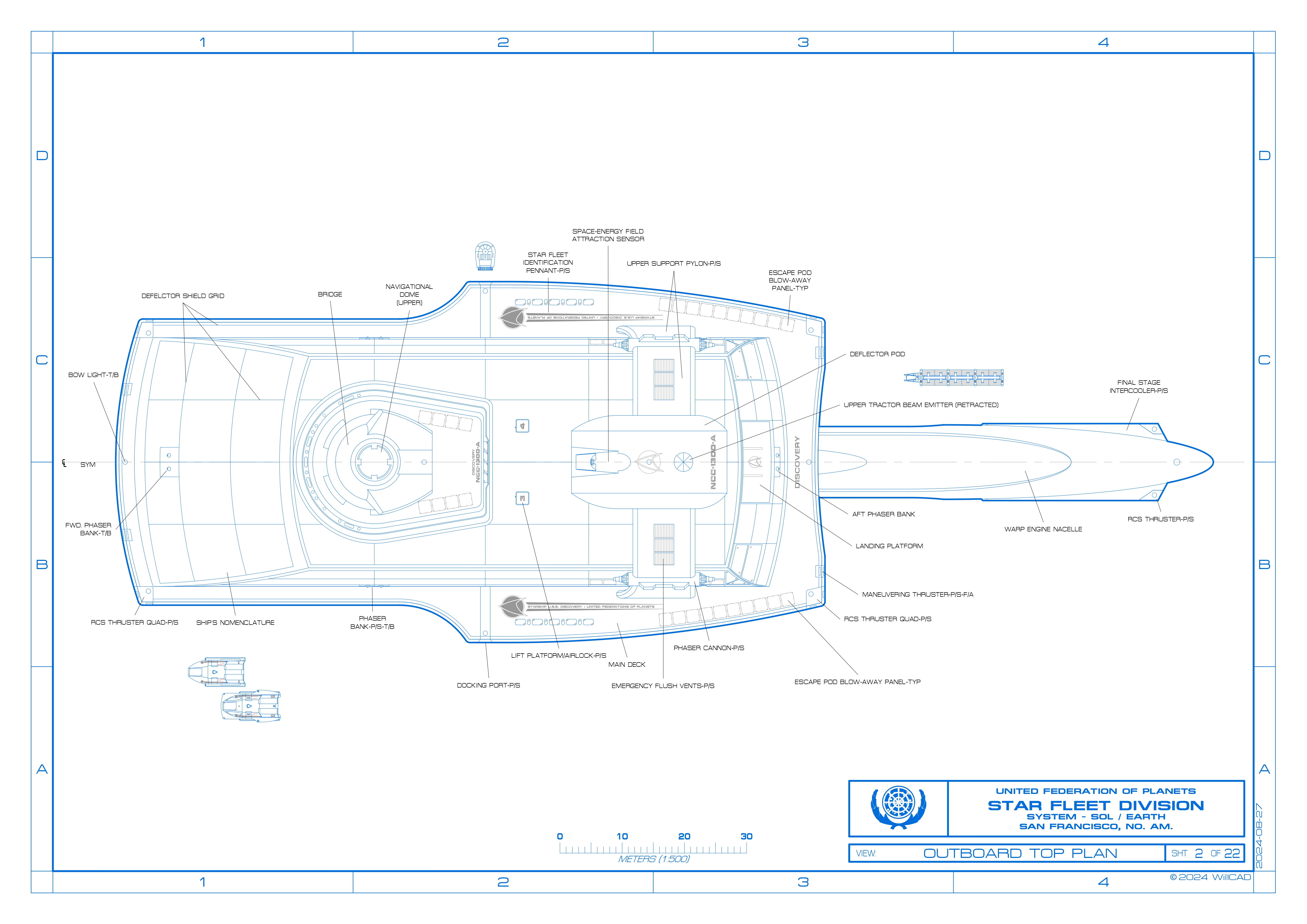
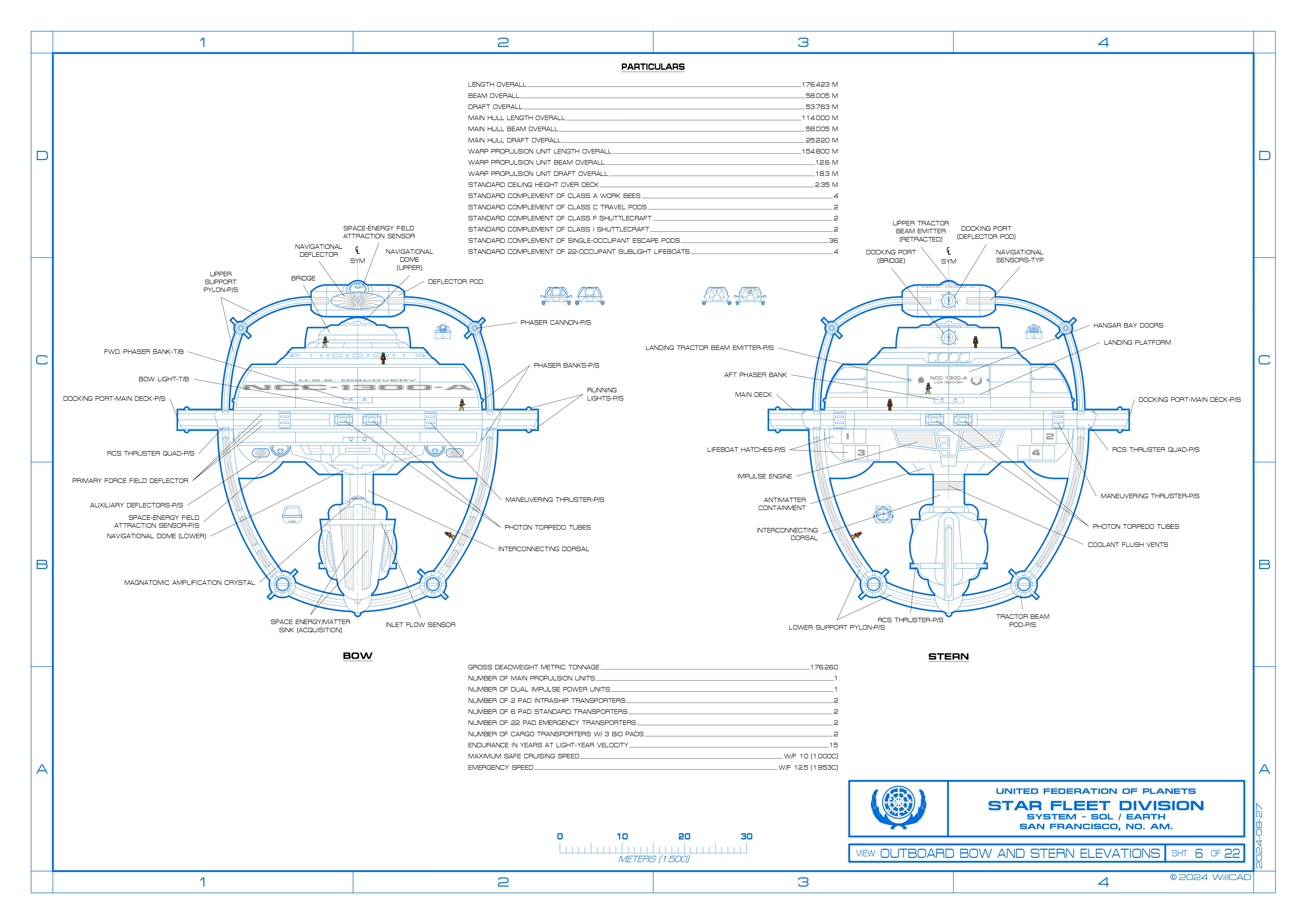
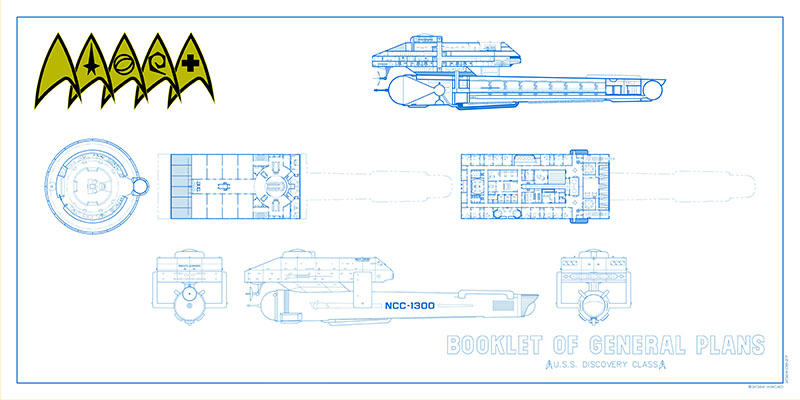
U.S.S. Discovery Class
NCC-1300/NCC-1300-A
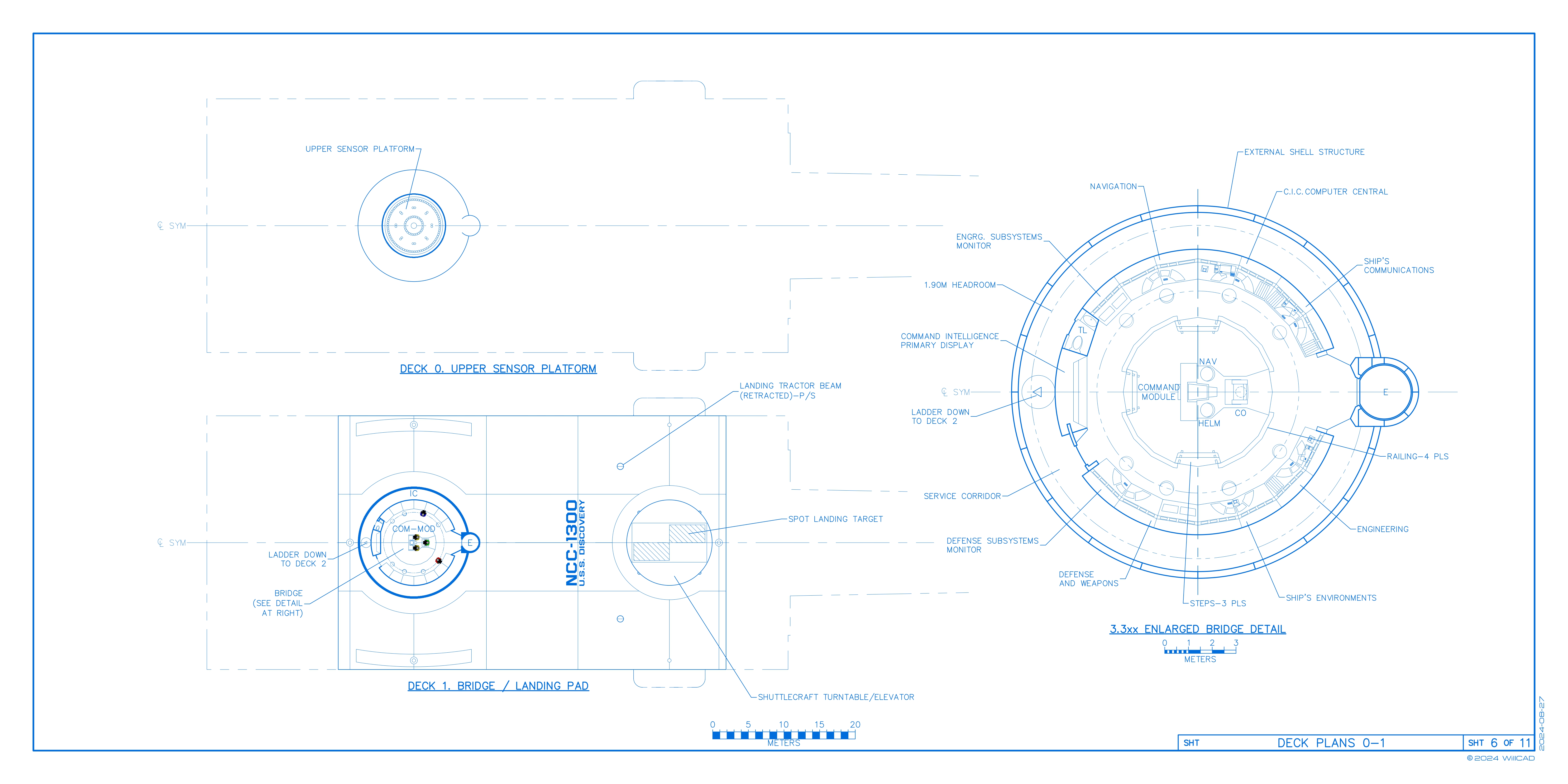
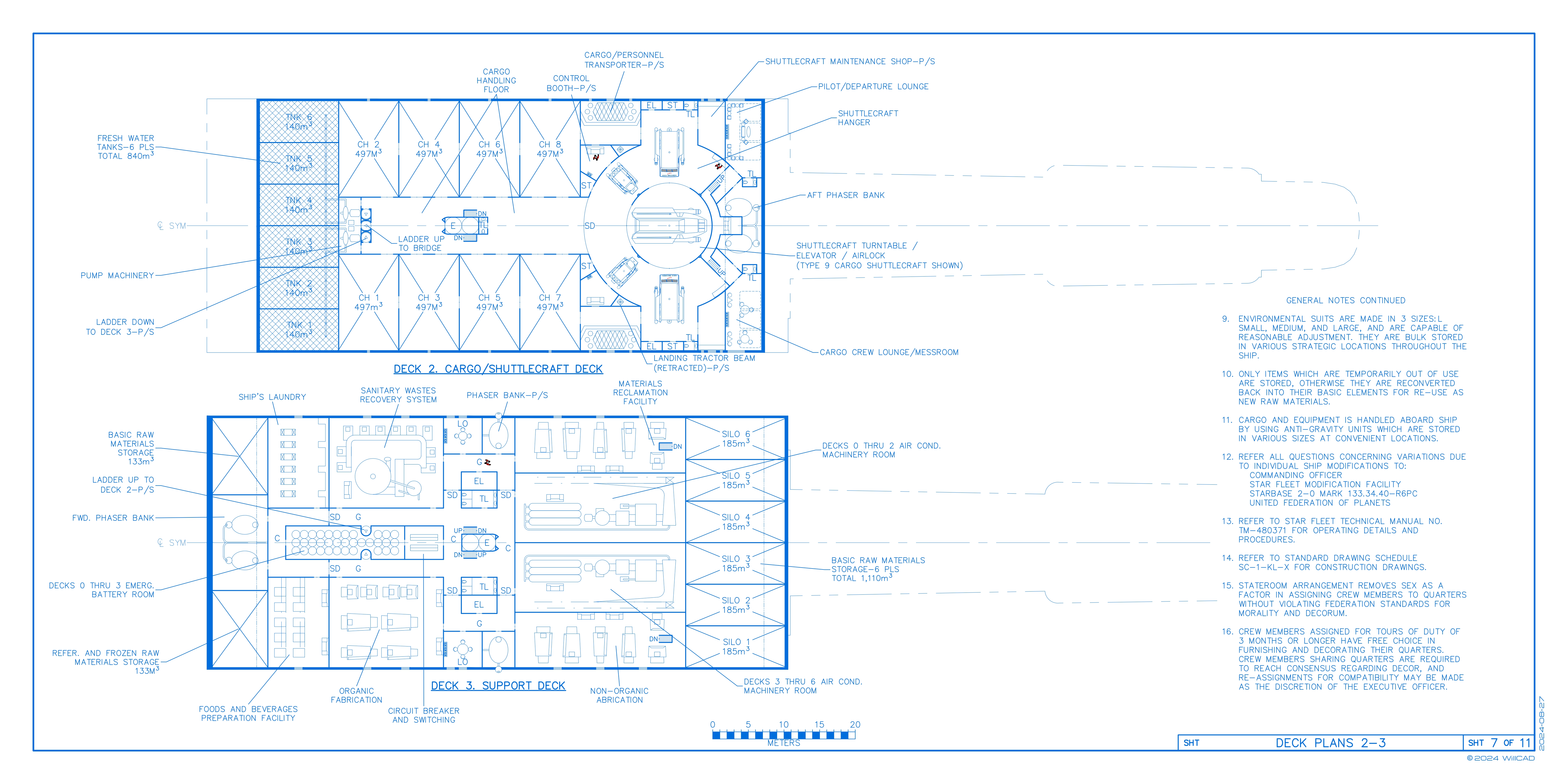
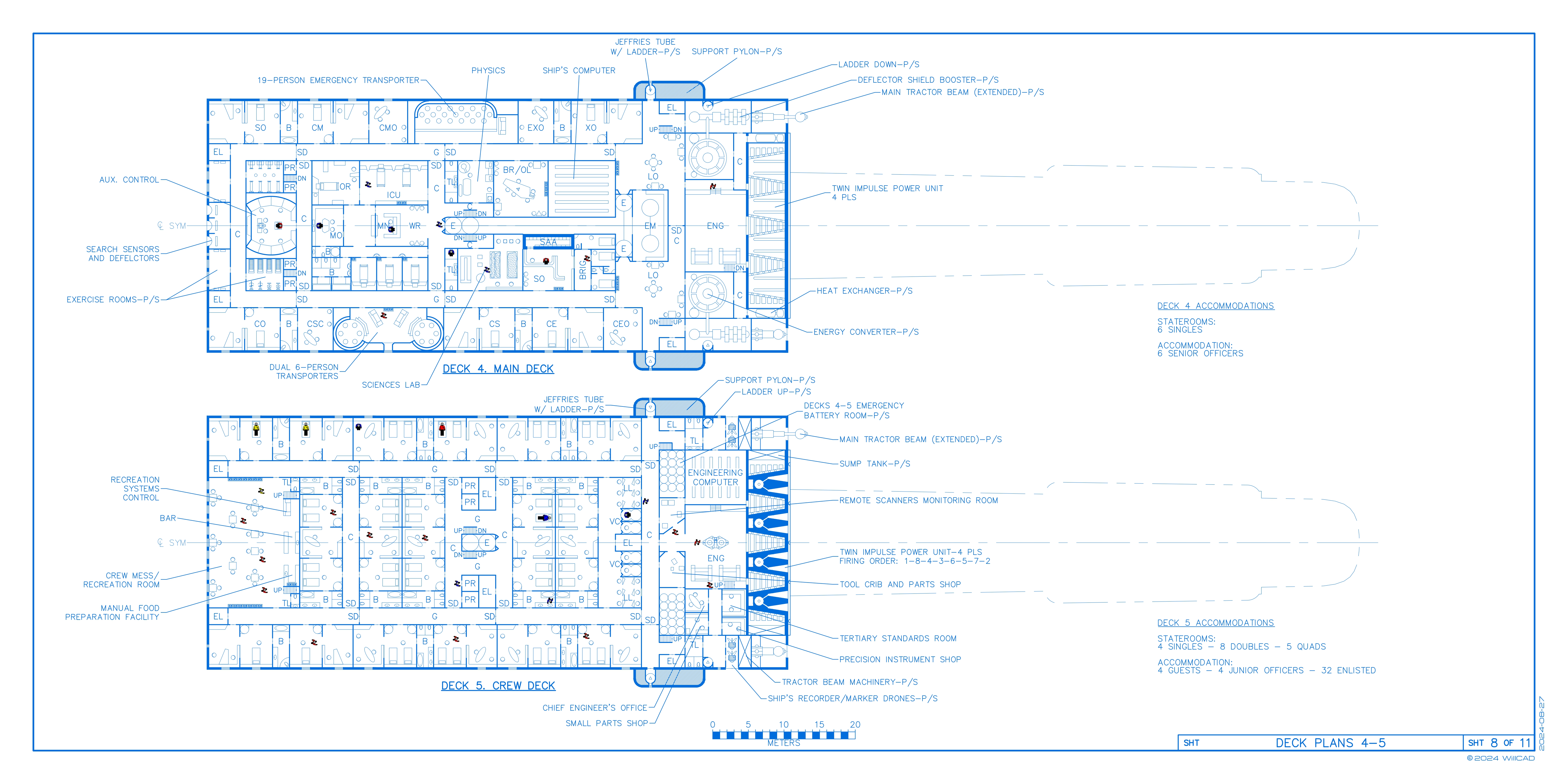
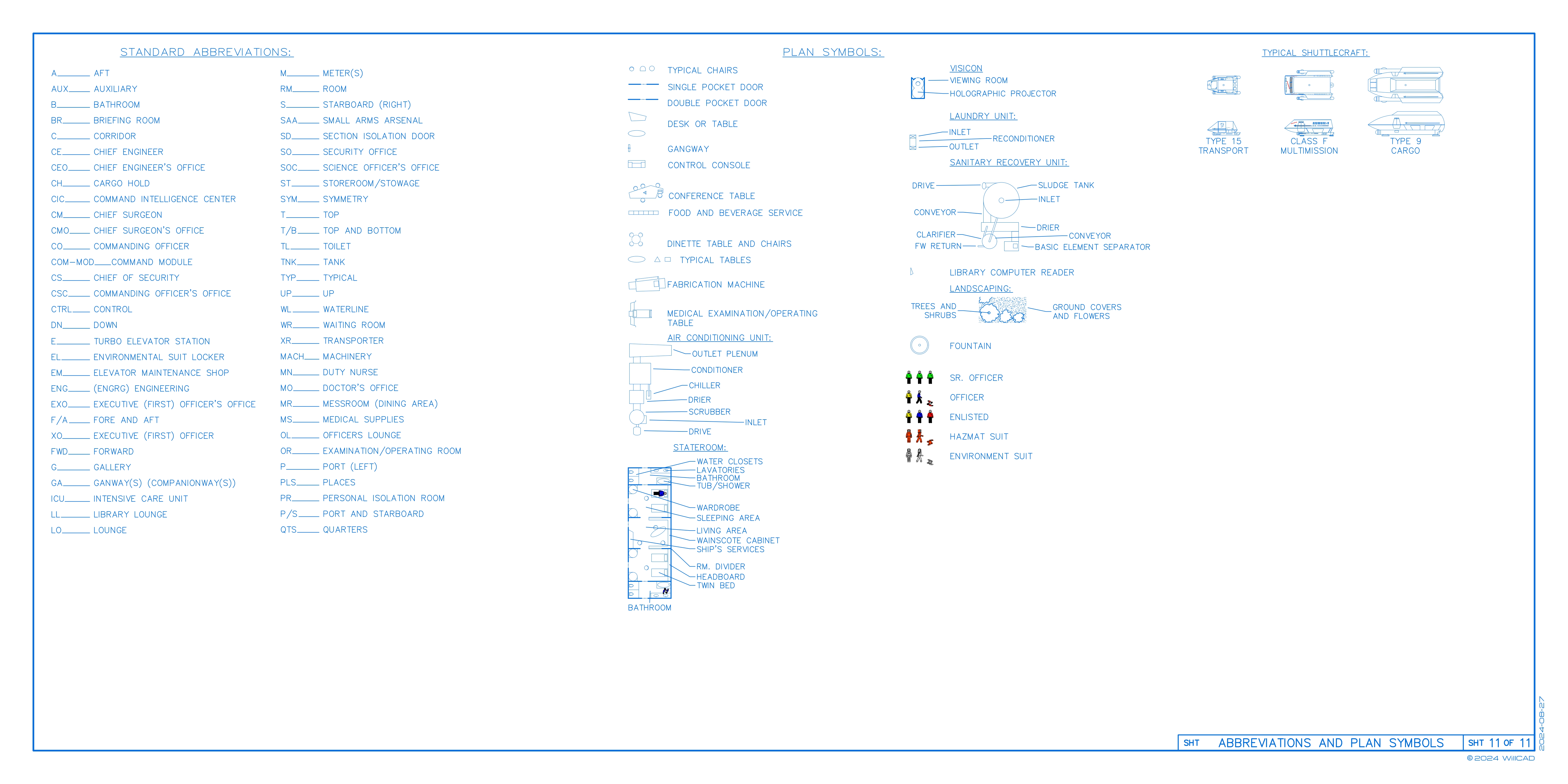
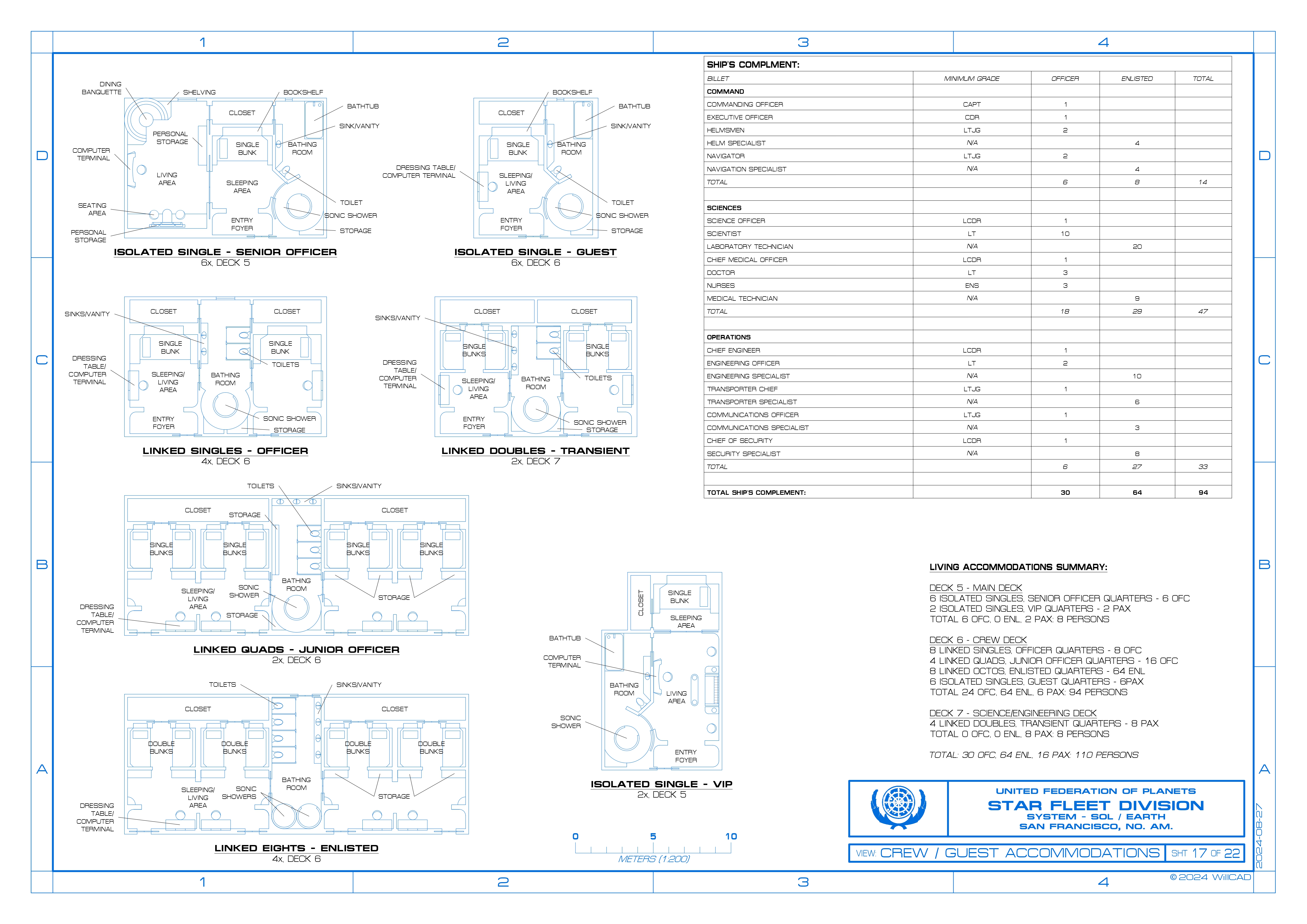
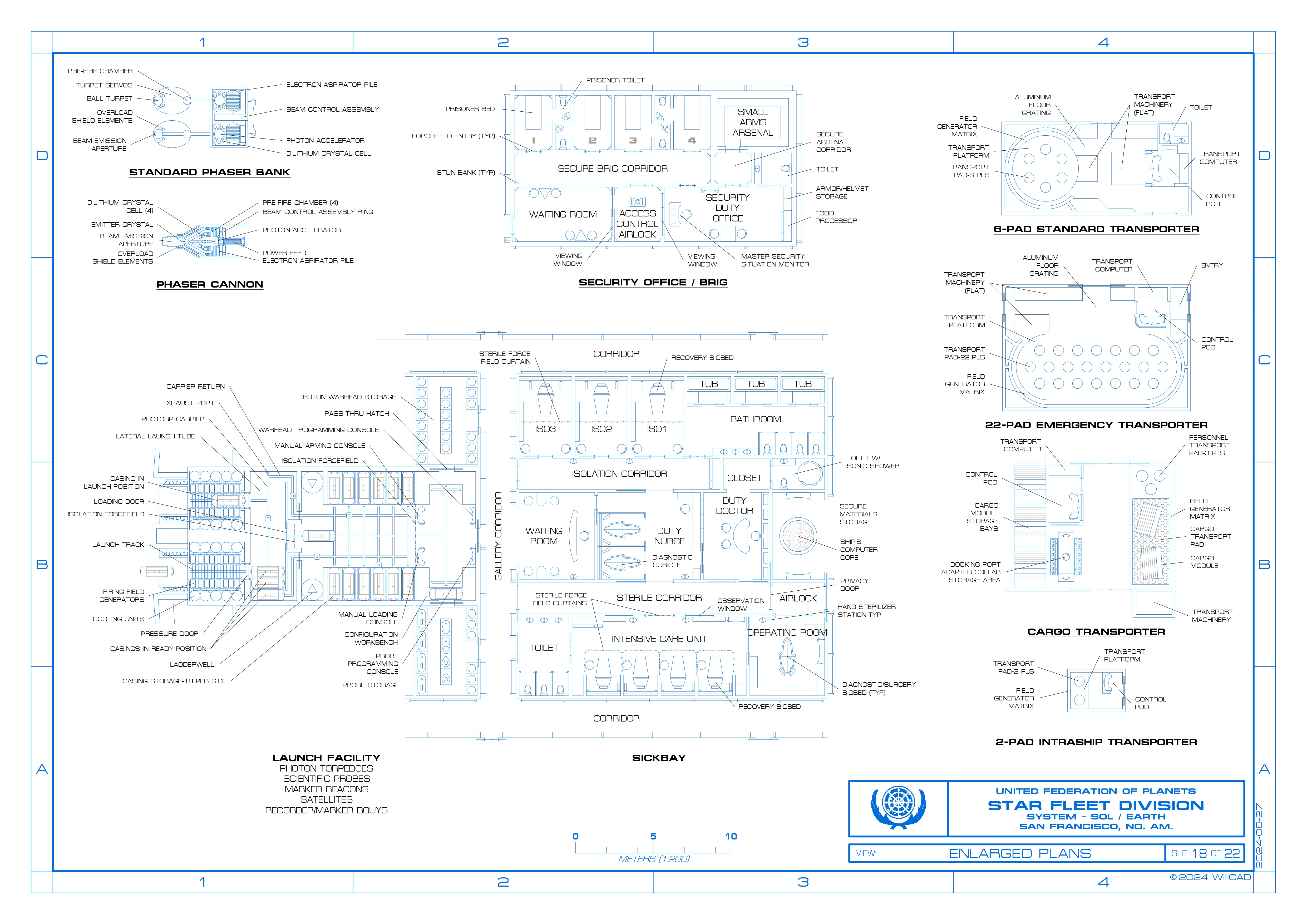
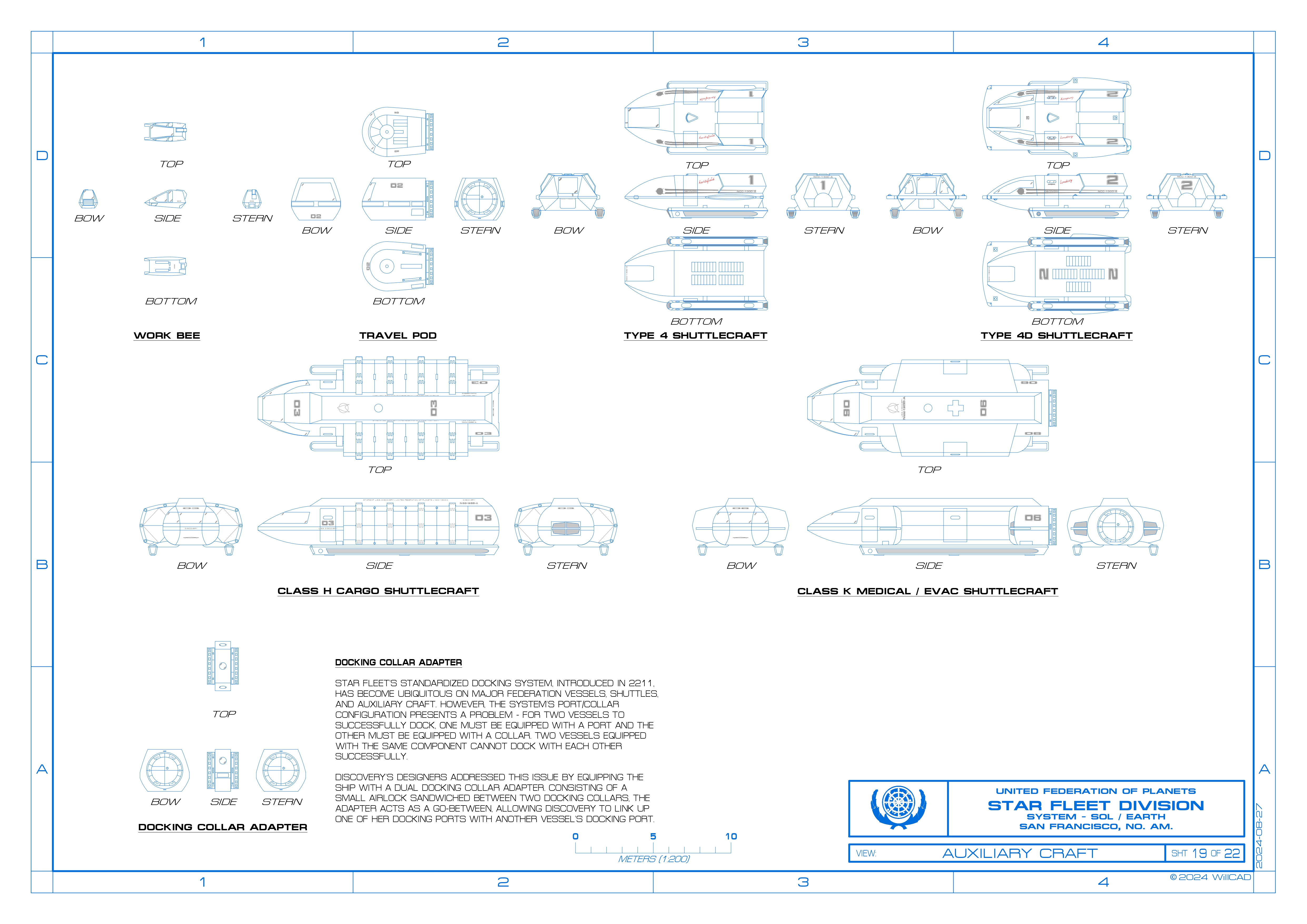
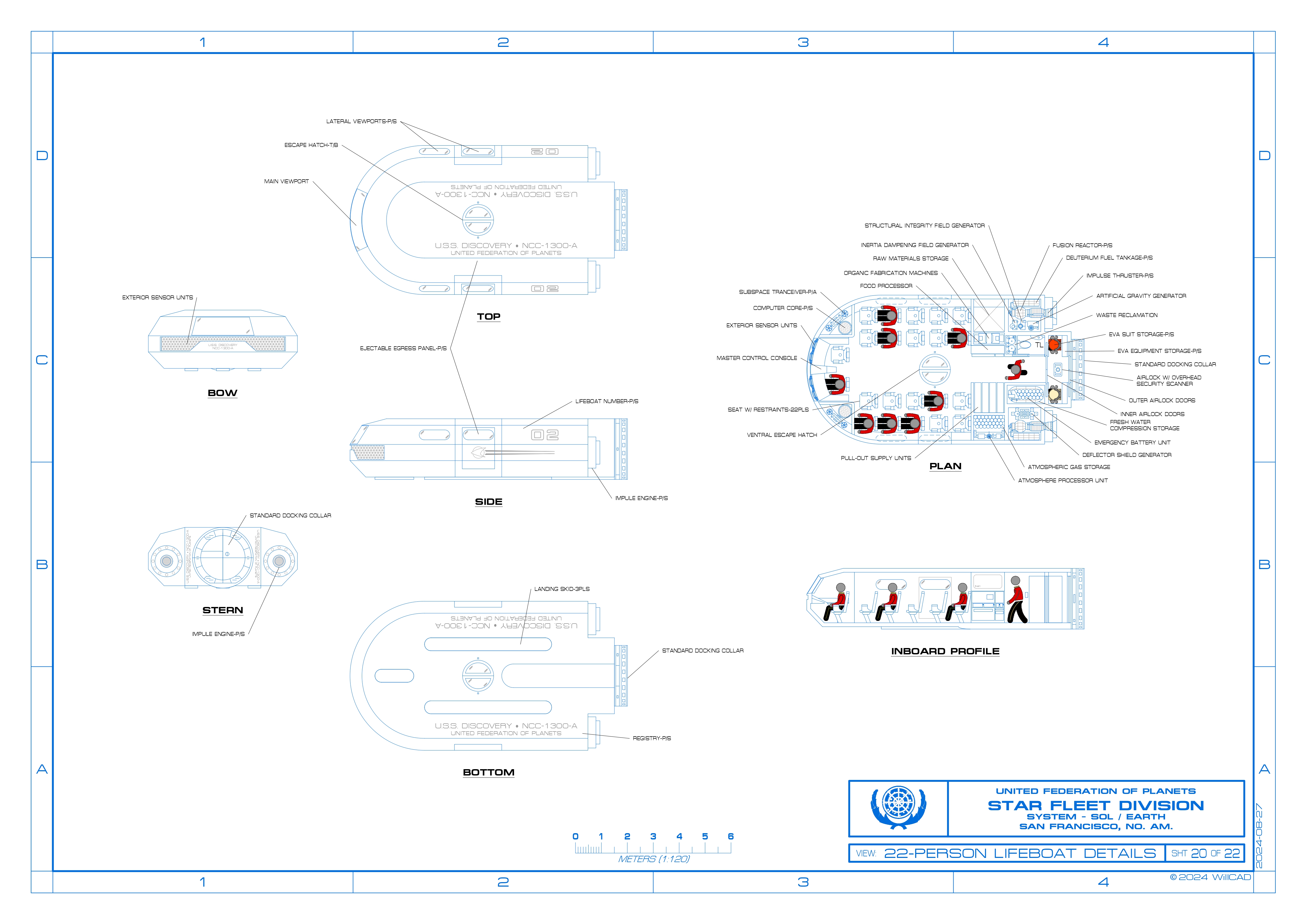
Deck Plans

Designer/Illustrator:
Will Garmer
©
2024
DESIGN CONCEPT
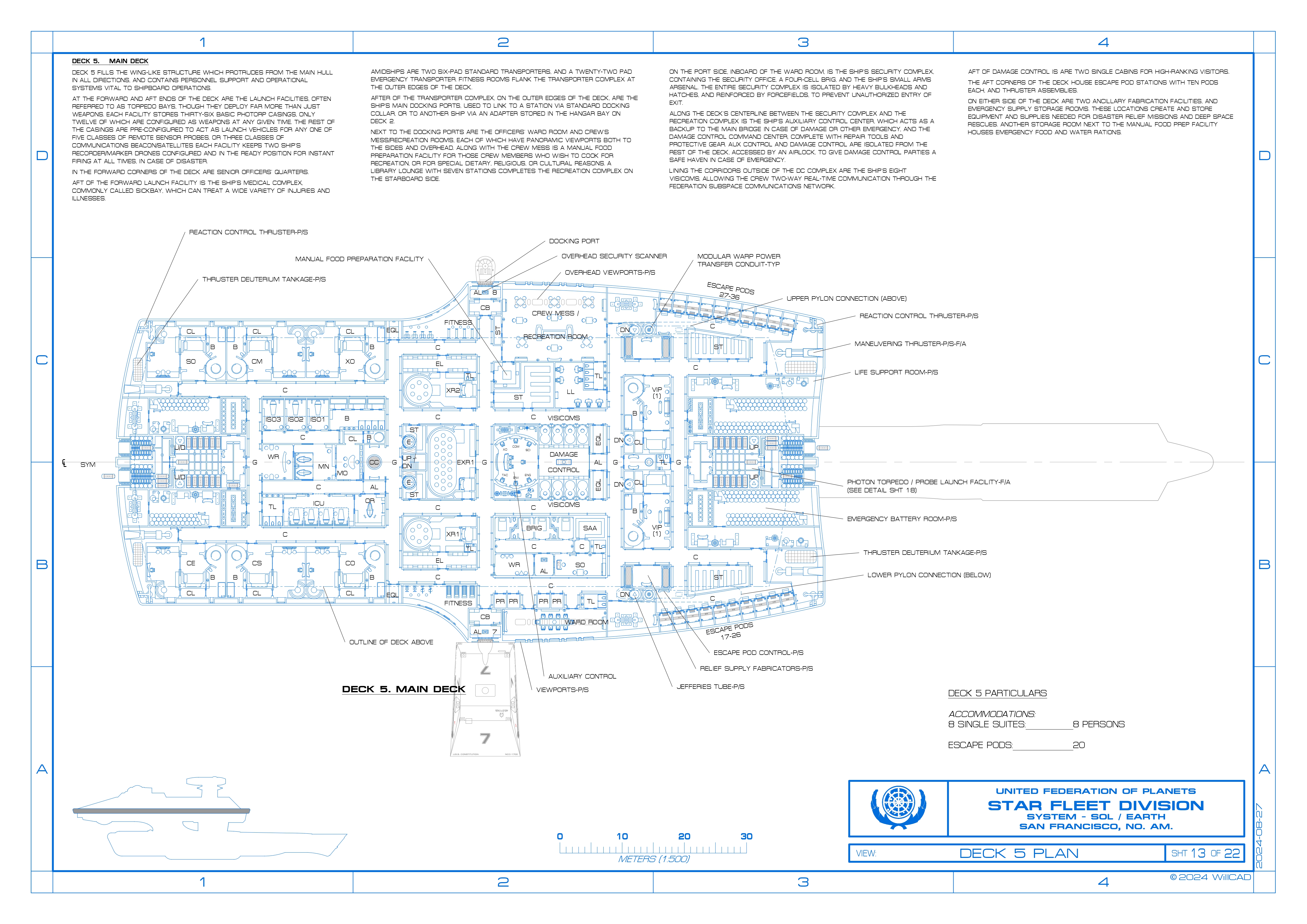
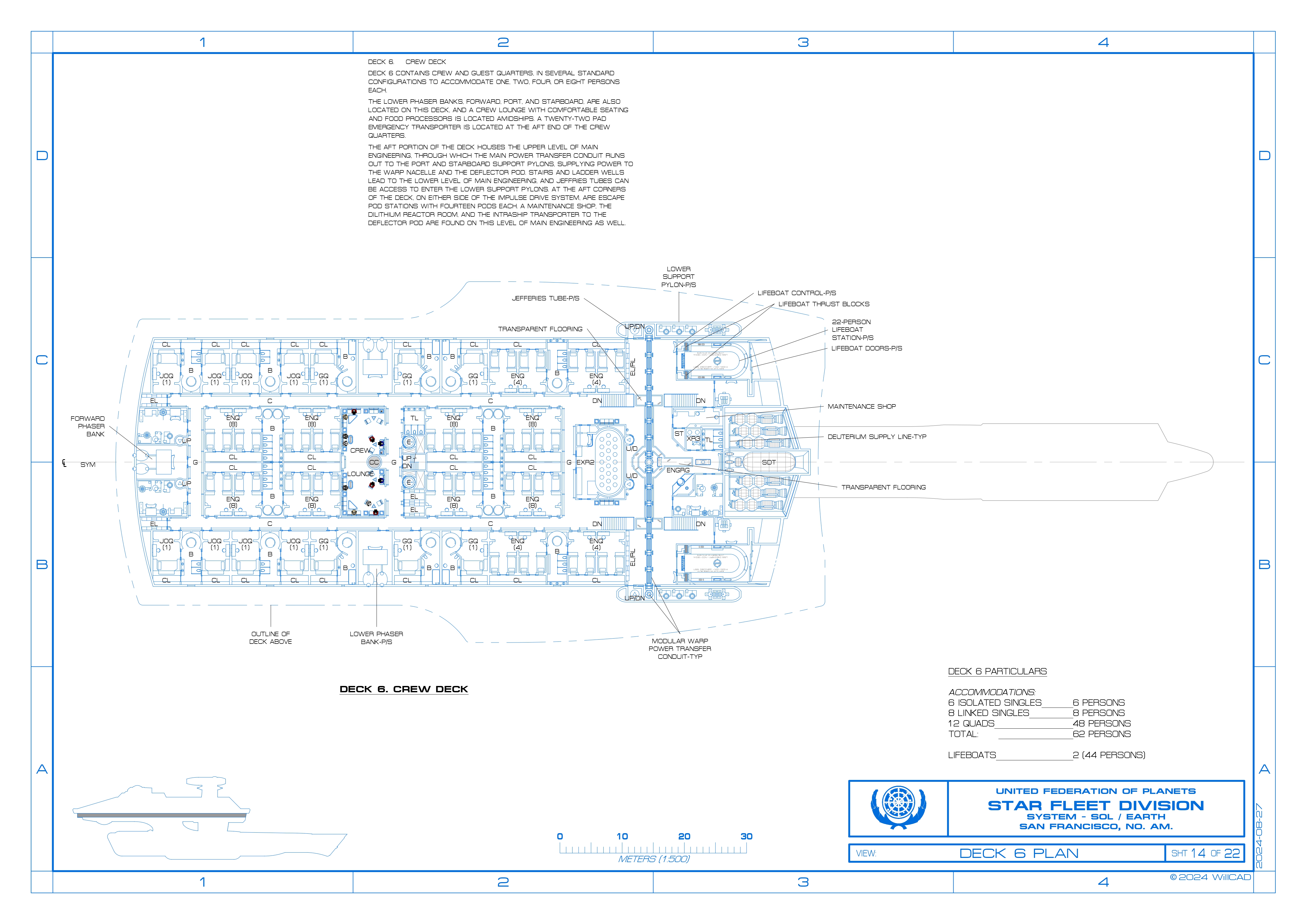
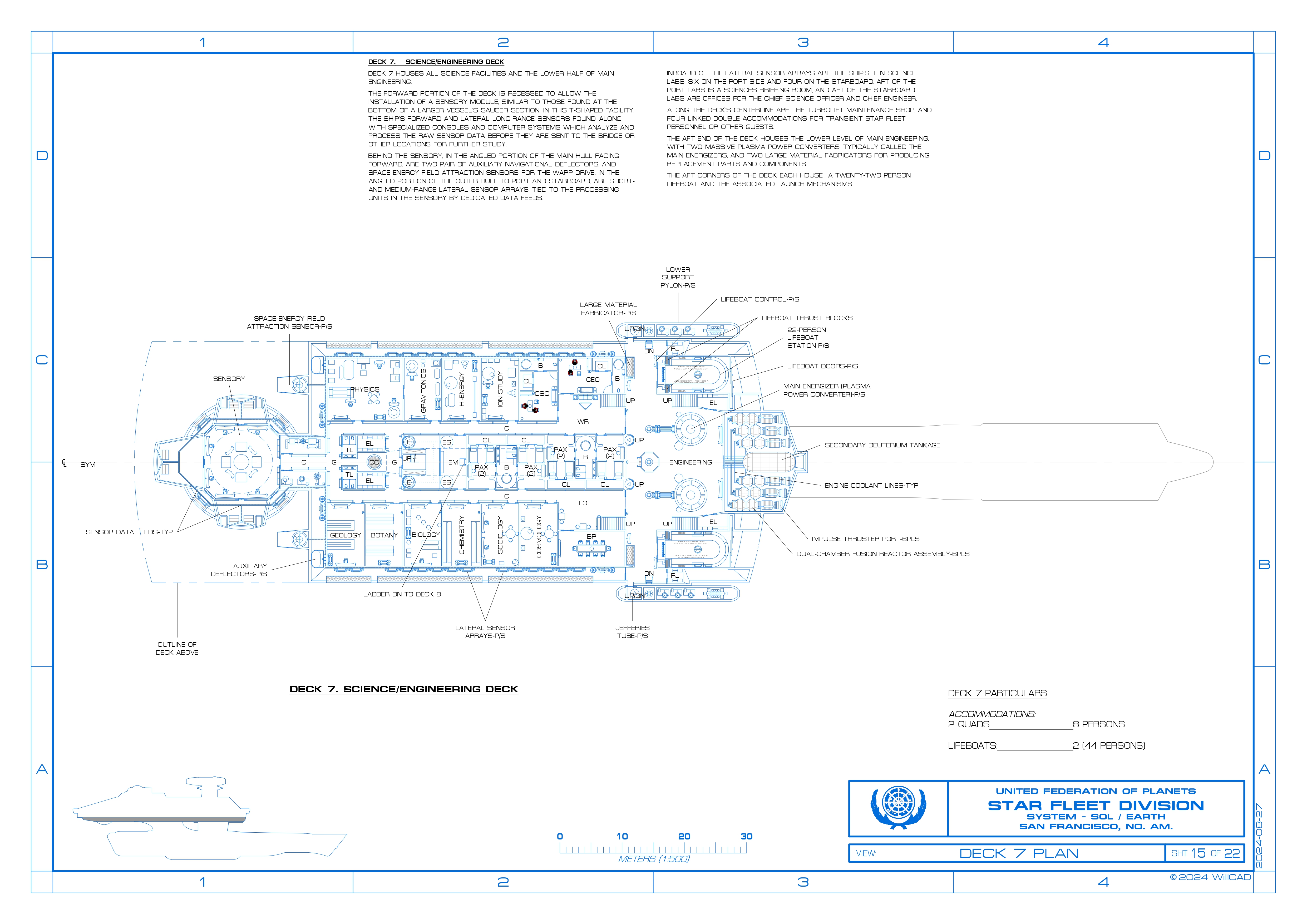
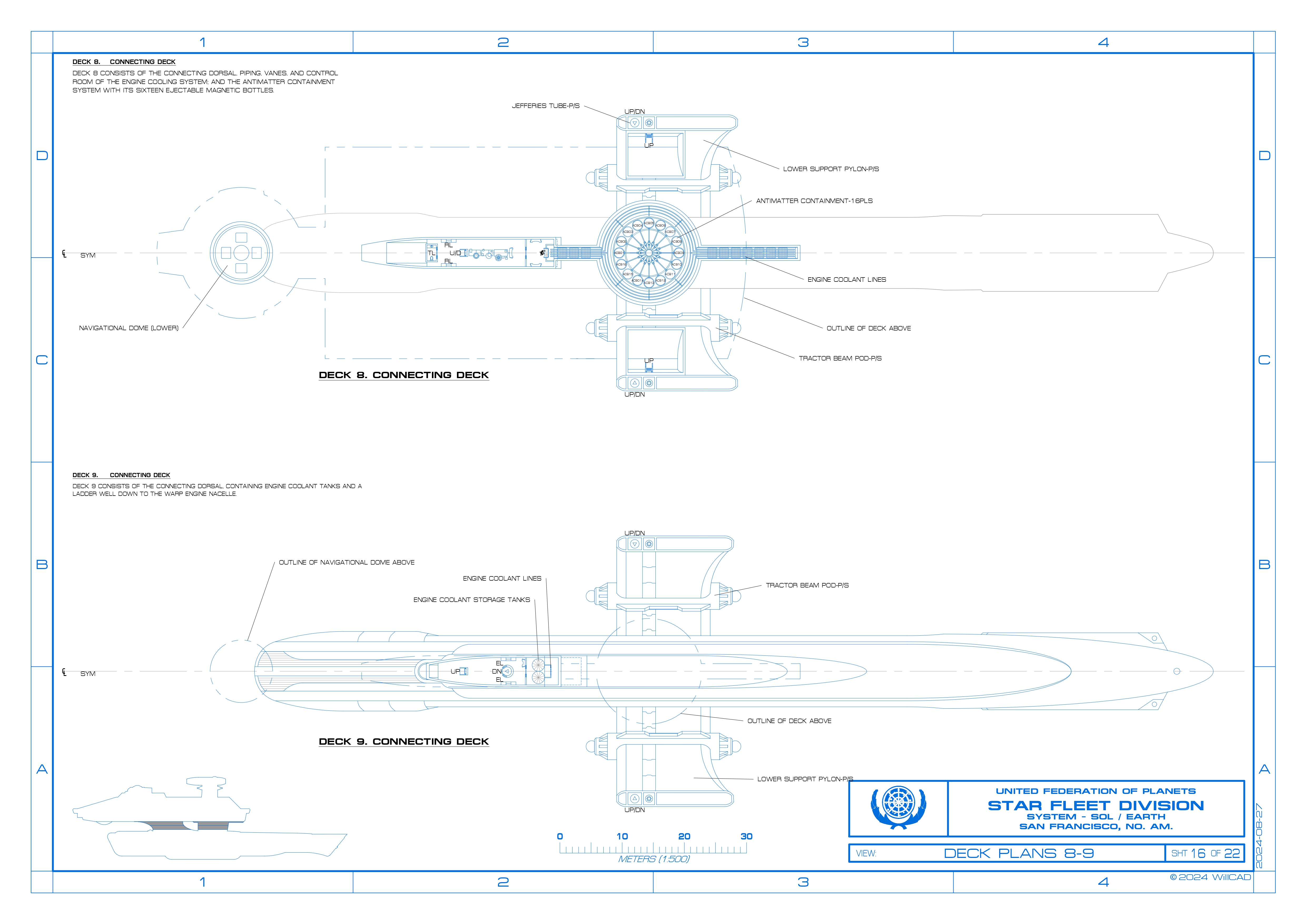
The Discovery class's initial design concept was to create a small, fast, maneuverable ship, using the same major power, propulsion, sensor, support, and defensive systems as the larger Constitution class. The ship's primary mission was to be near-space patrols inside Federation territory, providing search and rescue, disaster relief, light rapid transport, interdiction, and peacekeeping services to Federation members, colonies, and outposts.
POWER AND FLEXIBILLITY – THE MULTITOOL STARSHIP
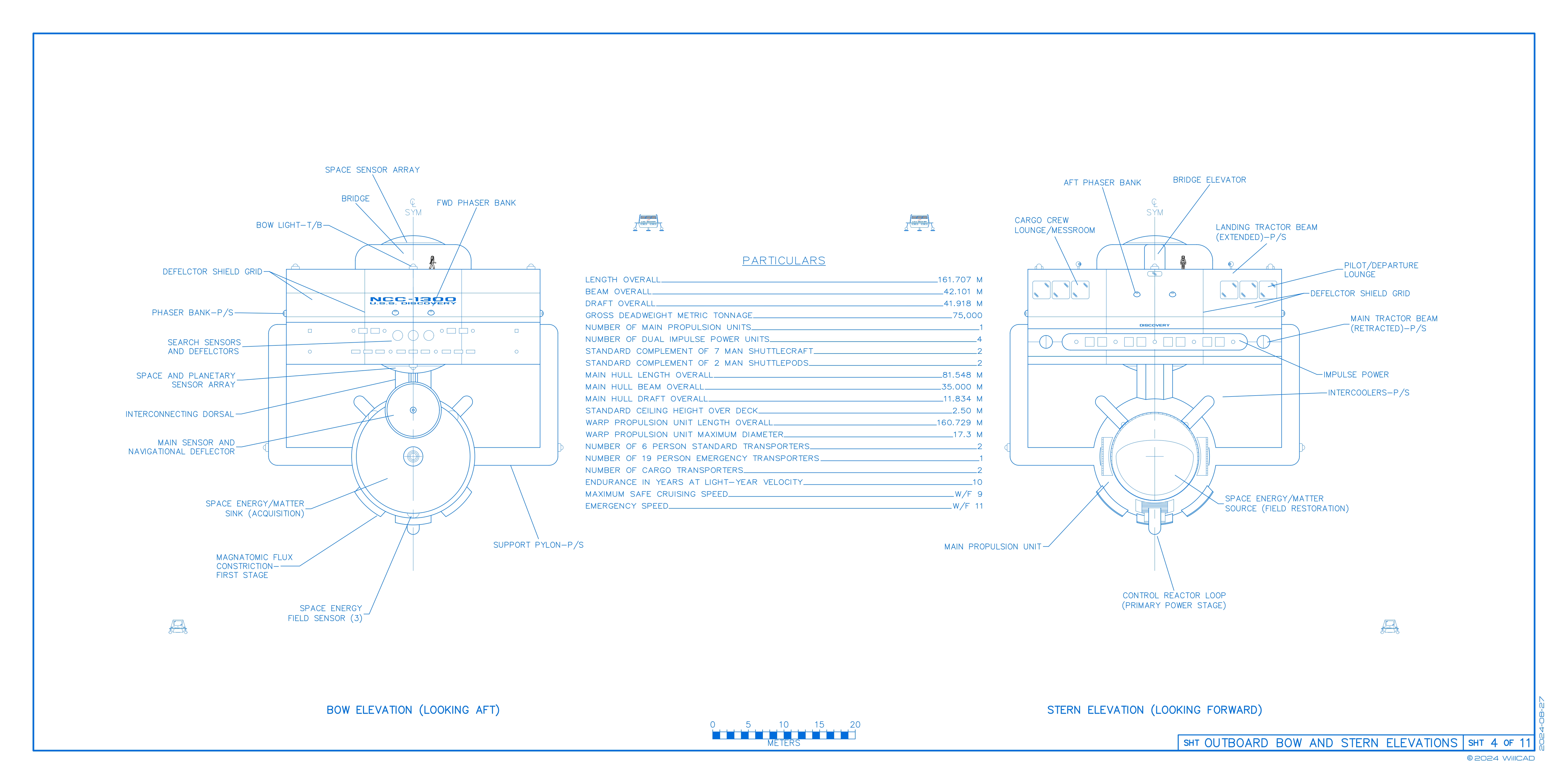
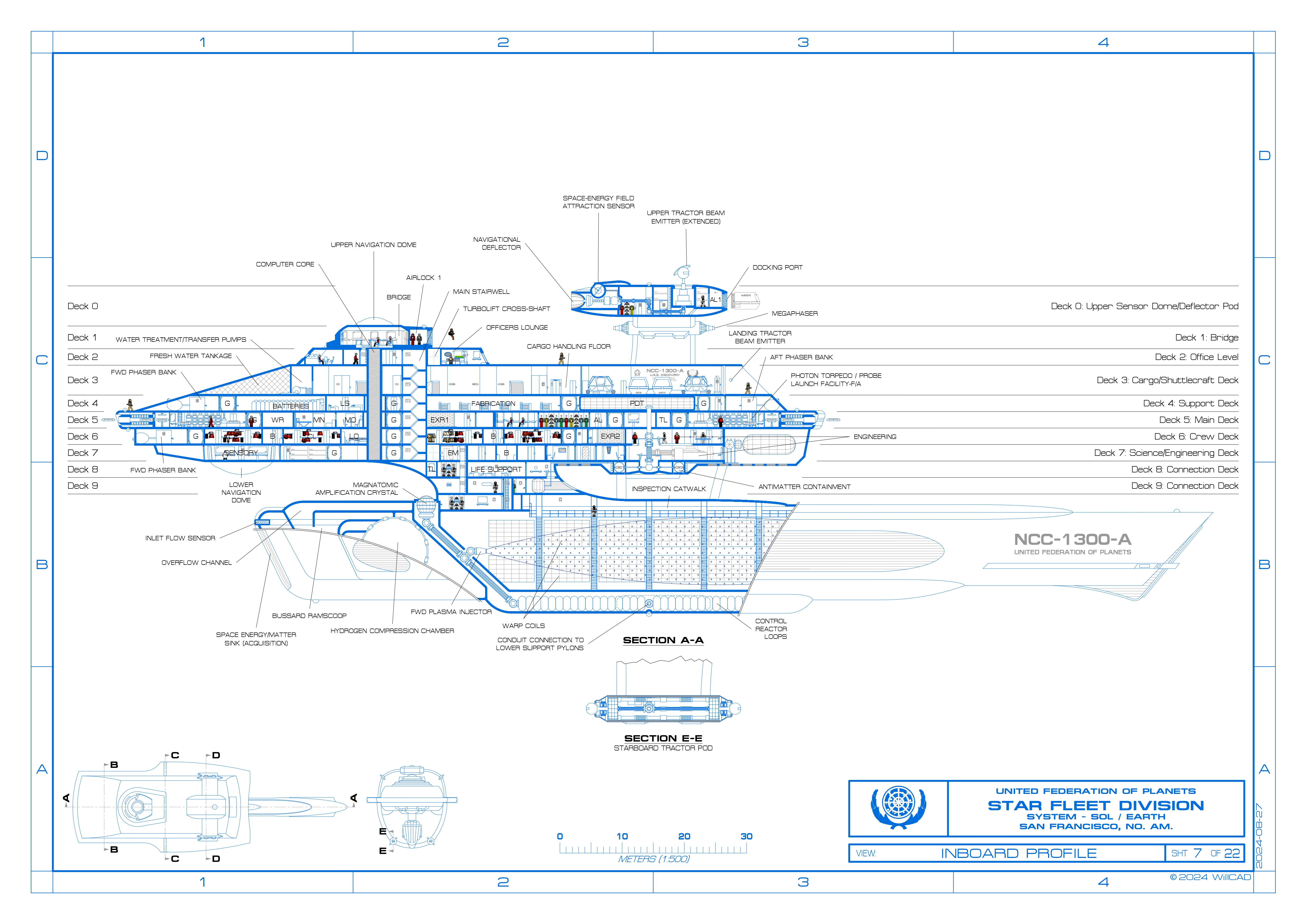
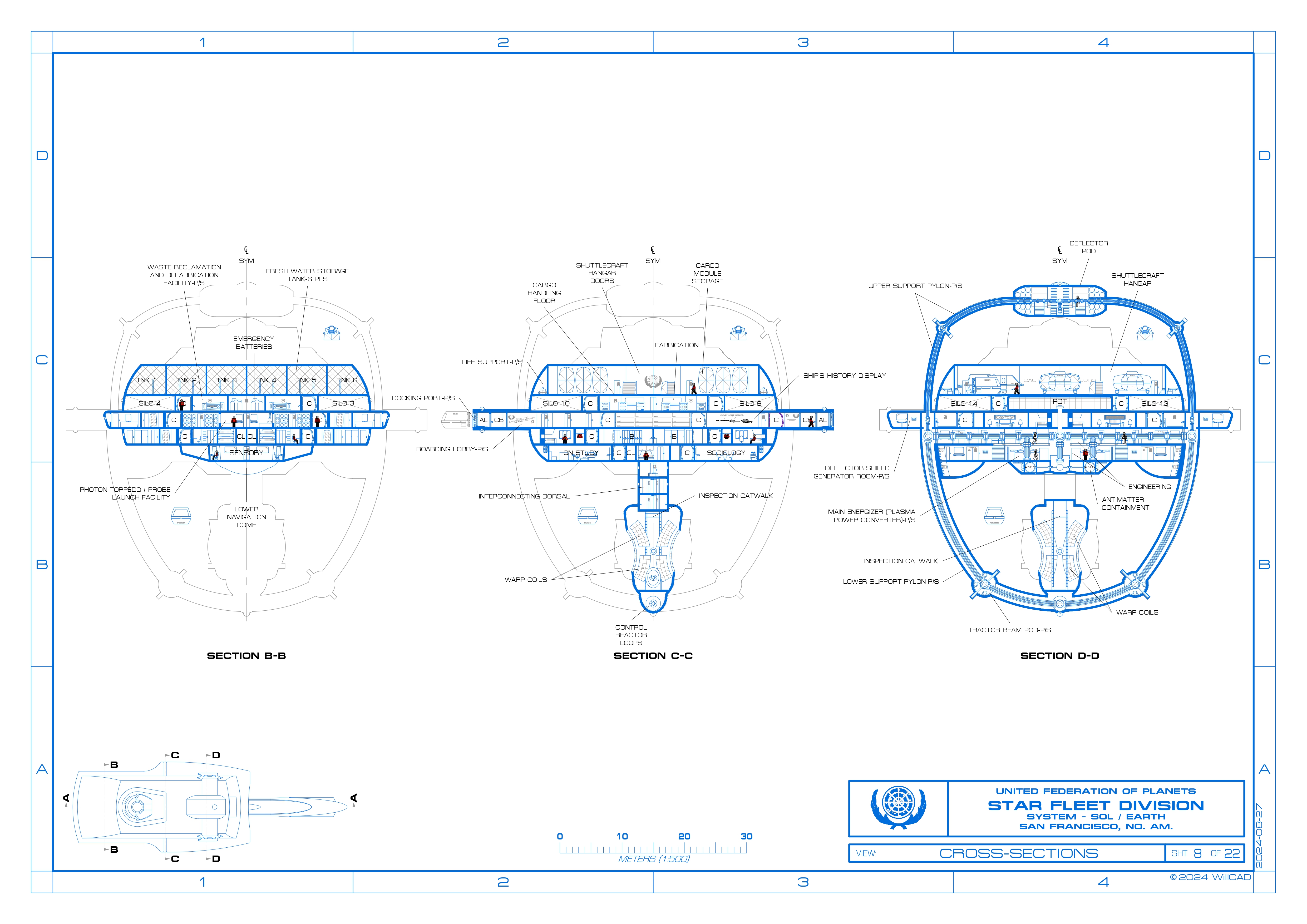
As first commissioned in 2243, the Discovery class fulfills all of her intended mission objectives, in a small, fast, maneuverable package that can outperform much larger ships. Stationed in near-space around the Federation's member worlds and their core colonies and outposts, the Discovery class provides quick response to emergencies and disasters of all kinds, rescuing stranded travelers, repairing broken-down vessels, transporting disaster relief supplies, and interdicting smugglers and lawbreakers of all kinds. When necessary, a Discovery can also join combat missions alongside her larger Saladin, Constitution, and Federation class cousins, and packs quite a punch with six phaser units in two dual banks and two single banks. A Discovery's tractor power is equal to some of her larger cousins, capable of towing a fully-loaded class I transport container at speeds up to warp factor six, or two linked containers at sublight speeds. Although the Discovery class lacks the science labs of the larger vessels, their sensor suites are as powerful as a Constitution or Federation class starship, able to scan at extremely long ranges with great precision, or perform detailed orbital scans of an entire planet's surface. A Discovery's eight internal cargo holds can accommodate up to 3,976 cubic meters of packaged, dry- or wet-bulk cargo in environmentally isolated conditions, allowing for colony or outpost resupply, or disaster relief missions. Average patrols last approximately two weeks, with a full cruise lasting twelve to eighteen months between maintenance refits. Each Discovery's design life is intended to be up to thirty years
REFIT OR REPLACEMENT?
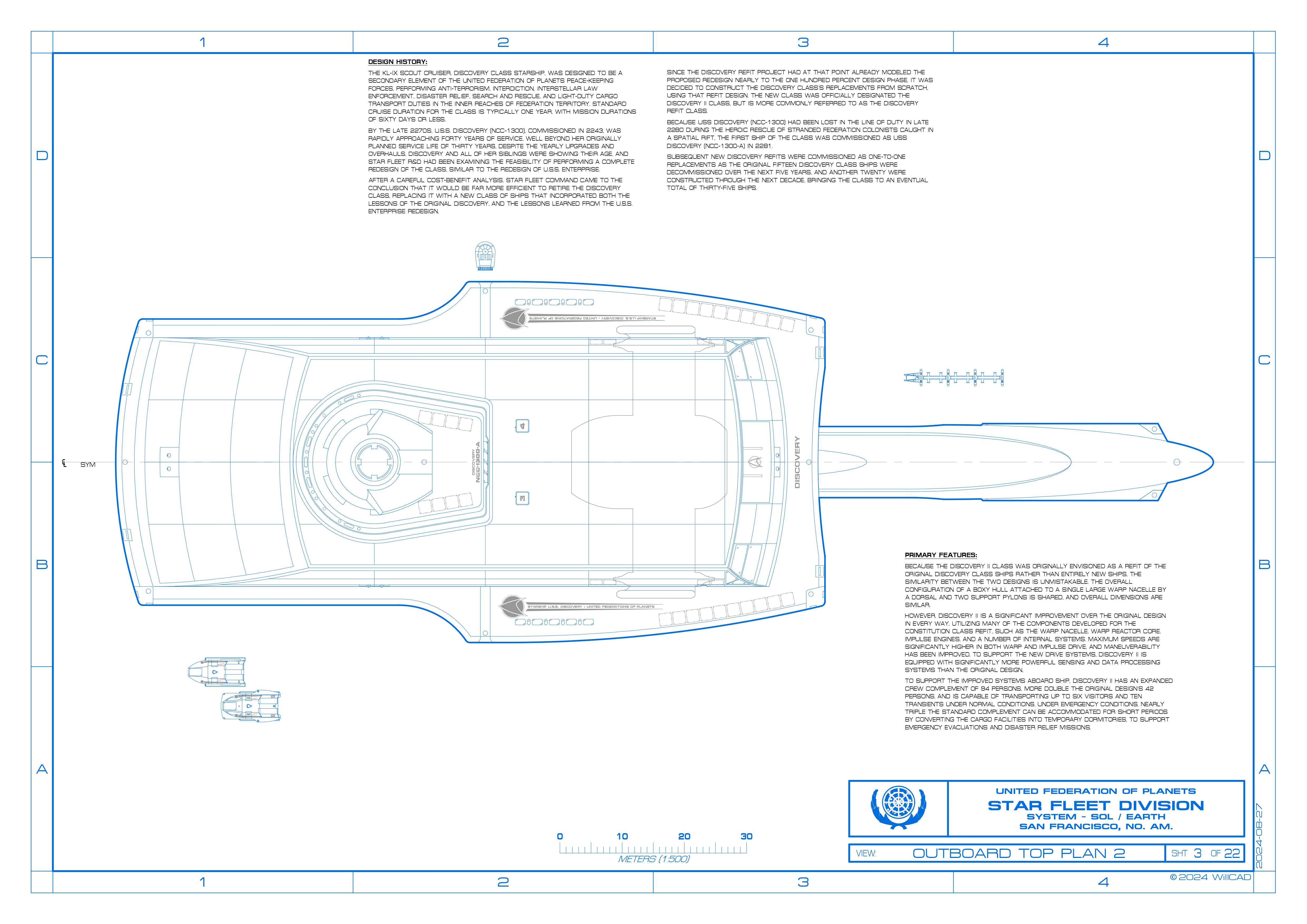
After the redesign and refit of U.S.S. Enterprise was completed in 2279, the legendary ship's new systems performed so well together that Star Fleet R&D re-examined all of the ongoing refit programs fleetwide, and deepened a number of those programs into total redesigns in an attempt to emulate the success of the Enterprise redesign. One of the earliest such programs was the Discovery class, and an aggressively expanded new design was proposed in early 2280. But U.S.S. Discovery (NCC-1300) had been commissioned in 2243 and was rapidly approaching forty years of service, well beyond her originally planned service life of thirty years, and despite the yearly upgrades and overhauls, Discovery and all of her siblings were showing their age. After a careful cost-benefit analysis, Star Fleet Command came to the conclusion that it would be far more efficient to retire the Discovery class, replacing it with a new class that incorporated both the lessons of the original Discovery and the lessons learned from the redesign of U.S.S. enterprise. Since the Discovery refit project had at that point already modeled the proposed new design nearly to the one hundred percent design phase, it was decided to construct a new class of ships from scratch using the design from the refit project. With the first ship off the ways set to replace NCC-1300 immediately after her loss in the line of duty in late 2280, the new class was simply called the Discovery refit, and the lead ship was commissioned as U.S.S. Discovery (NCC-1300-A). Subsequent new Discovery refits were commissioned in a one-to-one replacement as the original fifteen Discovery class ships were decommissioned over the next five years, and another twenty were constructed through the next decade, bringing the class to an eventual total of thirty-five ships.
Comments