
2112
Deluxe Edition
Originally Released: March 1976Deluxe Edition
Deluxe Edition Release: December 18th, 2012
Certified Platinum by RIAA: February 25, 1981
Certified 2x Platinum by RIAA: December 1, 1993
Certified 3x Platinum by RIAA: November 17, 1995
View All Album Certifications
Highest Billboard Chart Position: 61
Liner Notes
ALEX LIFESON
guitars
NEIL PEART
percussion
GEDDY LEE
bass and vocals
The only justification I need for what I'm doing with Rush is that we finish an album and we love it," singer-bassist Geddy Lee told me one afternoon in the fall of 1978. "Then we take it to the fans, and they respond to it. If what we were doing wasn't right, we wouldn't be where we are. "There may be ways of becoming bigger," he added, "but I'm not complaining."
Lee was sitting in the living room of his home in a suburb of Toronto, Canada, the city where he was born and his band was founded. He wore a promo sweatshirt for the British art-rock band Barclay James Harvest, and there was a vintage mellotron against one wall.
There was also ample evidence of Rush's recent, accelerating success, after a decade of hard touring, musical advance and baffled, sometimes vicious reviews: gold and platinum albums for the 1976 live set, All the World's a Stage; the 1977 studio LP, A Farewell to Kings; and 1976's 2112, Rush's fourth album and the group's creative and commercial breakthrough.
Lee was still only 25. He and guitarist Alex Lifeson began playing together shortly after they met in 1967, in a Toronto junior high school. Lifeson was already in a band called Rush when he asked Lee to join. Lee quit school in the eleventh grade to be in Rush full time.
"Club owners didn't want to hear it," Lee said with a laugh, recalling Rush's Cream-and-Led Zeppelin-inspired racket with original drummer John Rutsey. "Their big concern was that the waitresses couldn't hear the beer orders." He remembered a club gig in Oakdale, a town near the Ontario-Michigan border, which lasted half a set. "They got so many complaints from the neighbors next door we decided it was best just to get out of there."
But Rush really started when: Neil Peart replaced Rutsey in the summer of 1974, just before a U.S. tour to promote the debut album, Rush. Born outside Hamilton, Ontario, Peart came with a furious Keith Moon streak in his precise, orchestral drumming. He soon became Rush's lyricist as well, drawing on his avid reading of science-fiction writers such as Samuel R. Delany and Ray Bradbury and the controversial novelist Ayn Rand. Lee, Lifeson and Peart quickly worked their way up from the bottom of arena bills, playing power-blues about trouble and women, to headlining status and the epic storytelling and instrumental complexity on Fly By Night and Caress of Steel, both released in 1975.
"Every album is a point in Rush's history," Lee said that afternoon in 1978. "And if it's not getting better, something's wrong. Every album has to be the perfect Rush album."
The first, perfect Rush album, everyone in the band now agrees, was 2112 - "the first record," Lifeson has said, "where we sounded like Rush." Peart recently described it as "the beginning of everything for us a seed that spread out and grew." But this may be the most remarkable thing about 2112 Rush almost didn't get to make it.
 2112 was released 36 years ago, by Mercury Records in April, 1976. It was Rush's first gold, then platinum album and has never been out of print. The band still plays the title track, in some form, in every live show.
"2112" - the 20-minute suite that covered all of Side One on the original vinyl LP - is also 100 years young. It is set in a cold dystopian century - empty of music and joy, run by a totalitarian priesthood that fears spontaneous expression and crushes individual spirit too distant for most of us to dread or comprehend. Anyone listening to 2112 now is unlikely to-live long enough to see that turning of the calendar. Those who follow still have an eternity to prove this record wrong.
But 2112 was not science fiction. Everything in the main tale - youth and discovery; the mutinous power of music; oppression and silence; the choice between sacrifice and surrender - was and remains absolutely contemporary. In March, 1976, a couple of weeks before 2112 came out in North America, a military coup in Argentina marked the start of a seven-year dictatorship there that claimed thousands of victims - the so-called "Disappeared" including writers, poets and musicians. After the Iranian Revolution in 1979, the ruling Imans banned concerts and broadcasts of classical and popular music. Years later, in Afghanistan, the Taliban went further, prohibiting all musical instruments.
2112 is ultimately about giving everything you've got to the thing you love most, against all odds. Lee, Lifeson and Peart knew what they were talking about. In late 1975, on the eve of making this album, they were in their own dire straits: about to lose their record deal and, one night between gigs, talking of calling it quits.
Lee remembered that flicker of doubt in a 1980 interview with Guitar Player. "We were on an overnight drive to Atlanta, Georgia, and we were all real depressed, saying, 'Oh, this is never going to work! What are we doing here?' We were still getting pressure from people to commercialize our sound. But we always felt that if your music is interesting, people will like it."
Caress of Steel had been a test of that faith, with two multi-part concept pieces - "The Necromancer" and "The Fountain of Lamneth" - totaling 32 minutes. Reviews were scathing, the album sold poorly and Mercury threatened to drop Rush if they didn't cool the extremes. The band had trouble getting bookings, and the shows they played were not well attended. According to Peart, Rush's road crew drolly dubbed that run "The Down the Tubes Tour."
After the last show, a homecoming at Massey Hall in Toronto on January 10th, 1976, Rush went into the studio there with engineer and co-producer Terry Brown. The band still had a contract - barely - but there was no compromise. The five shorter tracks on Side Two - from "A Passage to Bangkok," an explorer's memoir wreathed in primo-weed smoke, to the heavy-rock finish "Something for Nothing" echoed the themes and frustrations in "2112" with more concision but no less daring in arrangement. "The whole theme of that album," Lee said in the 1980 interview, was "individuality...a passionate statement saying, 'Leave us alone, we're okay, we will still get along.'"
Also talking to Guitar Player that year, Lifeson ran down the typical birth of a Rush song. "Neil will go off and work on the lyrics," the guitarist said, "while Geddy and I sit together and throw ideas back and forth. Neil usually has one or two songs written before there are melodies to them, and that gets us started.
"We were pretty straightforward rock until 2112," he noted. After the crisis and doubt of Caress of Steel, 2112 "was like coming back with a vengeance," Lifeson contended. "That album still feels like that to me when I listen to it today. I can feel the hostility hanging out."
It doesn't hit you right away. "2112" begins in electronic mist and menace created on an ARP synthesizer. Then the thunder cracks. A staccato riff, played in crisp trio unison, and a tumbling ménage of hooks and flourishes from the later movements. There is heavy blues in "Overture" - the arcing sighs and biting-treble shots in Lifeson's soloing. You also hear the distance Rush have travelled from their roots and that first album, as composers and players.
Lee makes his vocal entrance in a commanding alpine register, as the holy police in "The Temples of Syrinx." But he was, In 1976, already a more melodic and nuanced singer than his critics claimed, and Lee plays the seeker, stumbling upon a guitar in "Discovery," with authentic wonder. The band echoes the emotional dynamics in Peart's story with the same fluid contrast: the swerve in temper from hopeful folk-rock to vindictive fury as the priests bring the hammer down in "Presentation"; the jangling guitar in clear-night echo in "Oracle: the Dream"; the furious closing instrumental as Peart's tense tight rolls and Lifeson's growling guitar evoke a last stand with no clear victor.
On the gatefold sleeve, under his credit for the lyrics of "2112," Peart acknowledged "the genius of Ayn Rand." In her epic and controversial novels The Fountainhead (1943) and Atlas Shrugged (1957), Rand advocated rational thought and individualism over collective force and conventional religion, a philosophy she called Objectivism. As Peart wrote the story and words of "2112," he recognized an unintended resemblance to Rand's 1938 novella, Anthem, in which a young rebel-genius is trapped in a society ruled by a council of tyrannical, reactionary scholars.
"It's always difficult to trace those lines, because so many things tend to coalesce," Peart said in a 1991 radio Interview. "I didn't realize it while I was working on it, [but] the parallels became obvious to me. So I did give credit to her writings." But the free will and fighting spirit in "2112" also came from close to home: Lifeson, born Alex Zivojinovic, was the son of Serbian immigrants, while Lee's parents were Polish Jews who had survived the Nazi concentration camps. Ayn Rand was "at some point in my life a formative influence," the bassist, born Gary Lee Weinrib, admitted in 2004. "But one of many," he quickly added.
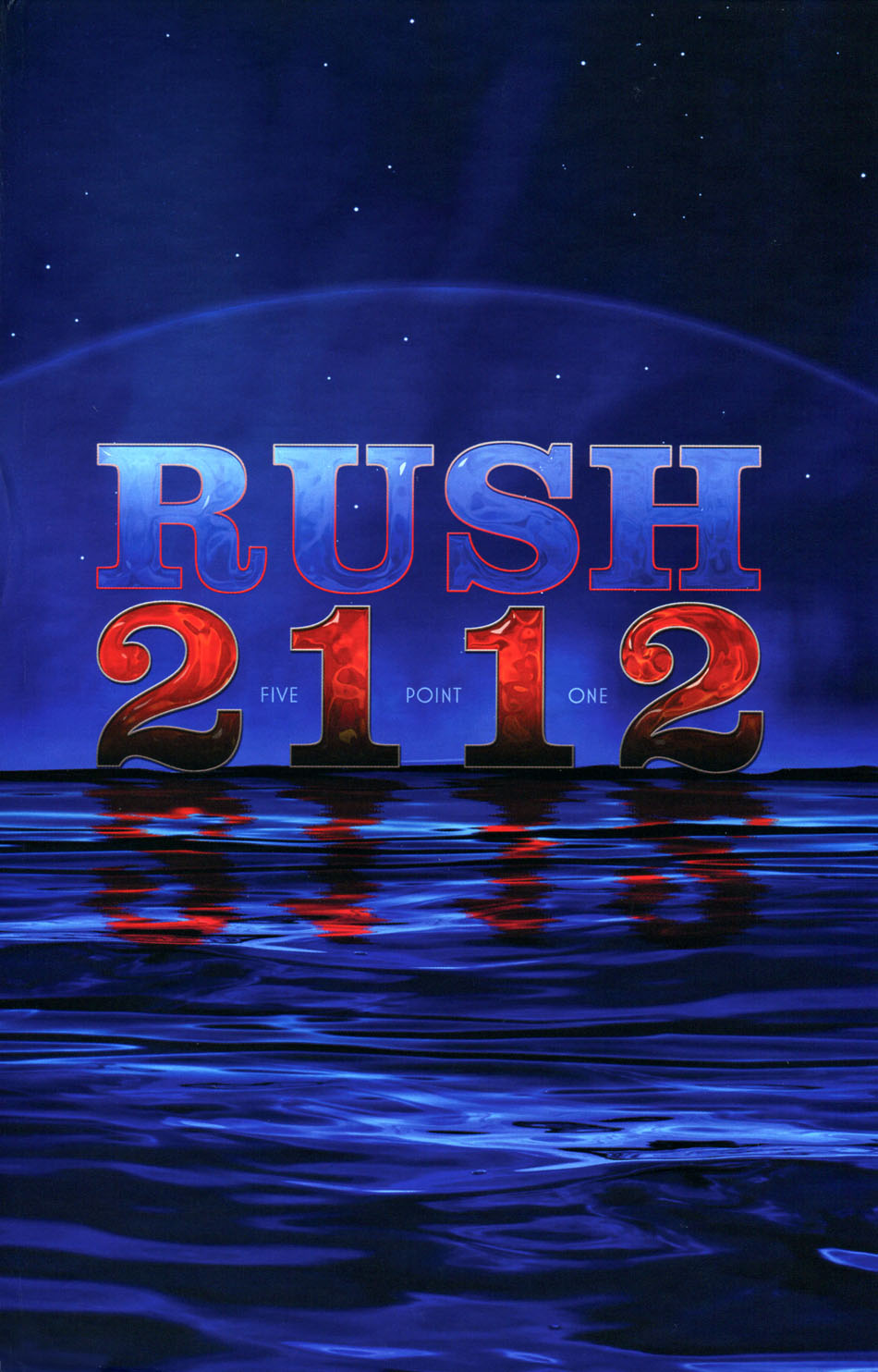
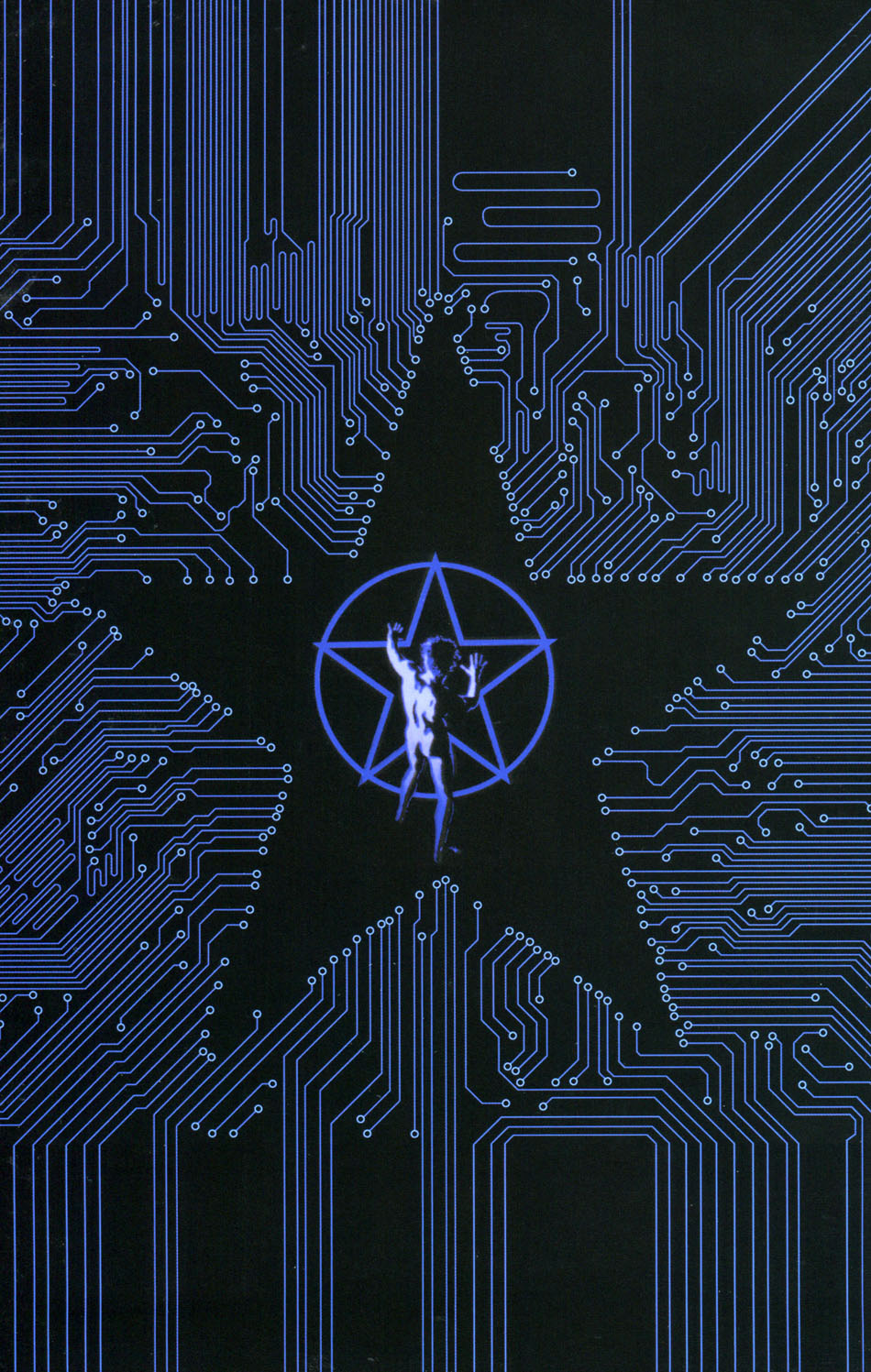
Side Two of 2112 is, nominally, the commercial half of the album. It also points ahead to the tonal adventure and melodic craft on 1980's Permanent Waves and Rush's second acknowledged classic and biggest seller, 1981's Moving Pictures. Lee flexes his vocal range, in pitch and character, amid the harmony-metal guitars in "The Twilight Zone." He also makes a rare appearance as a lyricist in "Tears," a spare ballad of sorrow and comfort with a pillowy mellotron played by album designer Hugh Syme, who created 2112's memorable "Starman" logo. The electronics and matured production of 2112 led Rush to briefly consider expanding then lineup, to play the music on stage; instead, they embraced multi-tasking. As Lifeson soloed in "A Passage to Bangkok," Lee would play rhythm guitar on a double-necked Rickenbacker while recreating the bass part on a Moog Taurus synthesizer, triggered by a pedal board. (Once, at a Rush show, I saw Lee get a thunderclap effect on a synthesizer with his ass - sitting on the keyboard as he continued playing bass.)
"Something For Nothing" ends 2112 like the suite in miniature. Peart wrote the lyrics after a ride to a gig in Los Angeles, where he spotted graffiti that declared "Freedom Isn't Free." "Let your heart be the anchor/And the beat of your own song," Peart wrote - and Lee sang at the end. But Rush knew that already "At our heaviest, we were touring seven months of the year and recording for two months," Lee told me in another interview, remembering the heavy weather before 2112. "It was hard, but we felt we had to do that because we weren't getting exposure any other way. Besides, we enjoyed playing, and what better way to learn your craft - to refine what you're doing - than to do it?"
I saw that pleasure and pride up close, shortly after my afternoon with Lee in 1978 - the following January, on stage in Pittsburgh. I was on tour with Rush as an honorary roadie, writing a story about crew life for the rock magazine Circus. At the end of the set, after the final climactic chord of "2112," Lifeson ran toward me with a huge grin and his Gibson guitar, which I grabbed and held ready until he ran back, flashing another big smile as the band returned for encores.
"People have this image of us," Lee remarked that day in his living room, "saying, 'You guys take yourselves too seriously.' And I say, 'You're full of shit.' We don't take ourselves too seriously, only what we do, because to us it's worth caring about."
In that way, 2112 is, more than anything, a record about being Rush. Loving music, moving it forward and taking it to the world, whatever the price. And it is perfect.
David Fricke / Rolling Stone / July, 2012
BONUS LIVE TRACKS
2112: Overture
2112: The Temples Of Syrinx
Moving Pictures Tour
Northlands Coliseum - Edmonton, AB, Canada
June 25, 1981
A Passage To Bangkok
Permanent Waves Tour
Manchester Apollo - Manchester, England
June 17 1980
ORIGINAL CREDITS
Produced by Rush and Terry Brown
Engineered by Terry Brown
Arrangements by Rush and Terry Brown
Recorded and stereo mixed at Toronto Sound Studios, Toronto, Canada
Roadmaster Howard (Herns) Ungerleider
Roadcrew Major Ian Grandy, L.B.L.B., Skip (Detroit Slider) Gildersleeve
Graphics: Hugh Syme
Photography: Yosh Inouye, Gerard Gentil (Band)
Management: Ray Danniels
Executive Production: Moon Records
A very special thank you to Ray, Vic, Terry, Howard, Ian, Liam, Skip, and Hugh for sharing the load.
Special thanks to (insert your name here)
Special guest Hugh Syme: keyboards on 'Tears'
With acknowledgement to the genius of Ayn Rand
DELUXE EDITION CREDITS
Supervised by Jeff Fura and Andy Curran
5.1 Surround Sound Mixed by Richard Chycki at Mixland, Ontario
Mastered by Andy VanDette at Masterdisk, New York NY
Blu-ray Production Facility: Sonic Pool
Menu Design: David Lange
Authoring: Marcus Ionis
Story Art: Tom Hodges
Color Assists: Terri Hodges
Art Direction and Design: Hugh Syme
Photos: Fin Costello and Bruce Cole
Production Manager: Monique McGuffin Newman
Product Manager: Rob Jacobs
Publicity: Sujata Murthy
Clearances: Andrew Labarrere
Management: Ray Danniels at SRO Management, Inc., Toronto
Special thanks: Pegi Cecconi, Meghan Symsyk, Bruce Resnikoff, Herb Agner, Vartan, Mike Diehl, Dave Wright, Carrie Hunt, everyone at SRO/Anthem, Strobosonic, UMD and UMe.
All lyrics ©1976 Core Music Publishing (SOCAN world ex USA / SESAC USA)
All music by Core Music Publishing. Used by permission.
Sheet Music: ©1976 (Renewed), 1981 CORE MUSIC PUBLISHING.
Used by Permission of ALFRED MUSIC PUBLISHING CO., INC.
All Rights Reserved. Unauthorized duplication is a violation of applicable laws.
© 2012 The Island Def Jam Music Group. B0017479-00 anthem
Comic Book Artwork and Lyrics: ©2012 Core Music.
CD:
Remastered Audio
Previously Unreleased Bonus Audio:
OVERTURE (Live)
THE TEMPLES OF SYRINX (Live)
A PASSAGE TO BANGKOK (Live)
BLU-RAY:
PCM & DTS-HD MASTER AUDIO 5.1 Surround Sound 96kHZ/24-bit
PCM Stereo 96kHz/24-bit
Additional Features:
Lyrics - English
Liner Notes - English
Photo Gallery
Digital Comic Book
PRODUCER'S NOTE: With this disc you are now able to hear at home what we hear in the studio. This disc contains all 6 tracks from 2112 in high resolution 96kHz 24-bit PCM stereo, PCM 5.1 surround sound and DTS-Hd Master Audio 5.1 surround sound. It is primarily an audio-only disc with basic navigation and song information displayed on-screen. The 96kHz 24-bit audio on this disc has 256 times more resolution than a CD, providing greater detail and reproducing the music's full dynamic range, from the softest to the loudest sounds.
universalmusicenterprises.com
© 2012 The Island Def Jam Music Group, 1755 Broadway, New York, NY 10019 - U.S.A.
Distributed by Universal Music Distribution. All rights reserved. B0017747-00
Articles
Big Time Rush: An Interview with Alex Lifeson - Guitar World Magazine, April 2013
Track Listing
1. 2112 (20:34)
2. A Passage to Bangkok (3:35)
3. The Twilight Zone (3:20)
4. Lessons (3:53)
5. Tears (3:35)
6. Something For Nothing (4:04)
7. 2112: Overture (Live) (4:31)
8. 2112: The Temples Of Syrinx (Live) (2:21)
9. A Passage To Bangkok (Live) (3:57)
2112
Music: Geddy Lee and Alex Lifeson / Lyrics: Neil Peart
I. Overture
"And the meek shall inherit the earth."
II. Temples of Syrinx
..."The massive grey walls of the Temples rise from the Heart of every Federation city. I have always been awed by them, to think that every single facet of every life is regulated and directed from within! Our books, our music, our work and play are all looked after by the benevolent wisdom of the priests..."
We've taken care of everything
The words you read
The songs you sing
The pictures that give pleasure
To your eye
One for all and all for one
Work together
Common sons
Never need to wonder
How or why
We are the Priests
Of the Temples of Syrinx
Our great computers
Fill the hallowed halls
We are the Priests
Of the Temples of Syrinx
All the gifts of life
Are held within our walls
Look around this world we made
Equality
Our stock in trade
Come and join the Brotherhood
Of Man
What a nice contented world
Let the banners
Be unfurled
Hold the Red Star proudly
High in hand.
III. Discovery
..."Behind my beloved waterfall, in the little room that was hidden beneath the cave, I found it. I brushed away the dust of the years, and picked it up, holding it reverently in my hands. I had no idea what it might be, but it was beautiful"...
..."I learned to lay my fingers across the wires, and to turn the keys to make them sound differently. As I struck the wires with my other hand, I produced my first harmonious sounds, and soon my own music! How different it could be from the music of the Temples! I can't wait to tell the priests about it! ..."
What can this strange device be?
When I touch it, it gives forth a sound
It's got wires that vibrate, and give music
What can this thing be that I found?
See how it sings like a sad heart
And joyously screams out its pain
Sounds that build high like a mountain
Or notes that fall gently, like rain.
I can't wait to share this new wonder
The people will all see its light
Let them all make their own music
The Priests praise my name on this night.
IV. Presentation
..."In the sudden silence as I finished playing, I looked up to a circle of grim, expressionless faces. Father Brown rose to his feet, and his somnolent voice echoed throughout the silent Temple Hall"...
..."Instead of the grateful joy that I expected, they were words of quiet rejection! Instead of praise, sullen dismissal. I watched in shock and horror as Father Brown ground my precious instrument to splinters beneath his feet..."
I know it's most unusual
To come before you so
But I've found an ancient miracle
I thought that you should know
Listen to my music
And hear what it can do
There's something here as strong as life
I know that it will reach you.
The Priests:
Yes, we know
It's nothing new
It's just a waste of time
We have no need for ancient ways
Our world is doing fine
Another toy
That helped destroy
The elder race of man
Forget about your silly whim
It doesn't fit the plan
I can't believe you're saying
These things just can't be true
Our world could use this beauty
Just think what we might do
The Priests:
Don't annoy us further
We have our work to do.
Just think about the average
What use have they for you?
V. Oracle: The Dream
..."I guess it was a dream, but even now it all seems so vivid to me. Clearly yet I see the beckoning hand of the oracle as he stood at the summit of the staircase"...
..."I see still the incredible beauty of the sculptured cities, and the pure spirit of man revealed in the lives and works of this world. I was overwhelmed by both wonder and understanding as I saw a completely different way to life, a way that had been crushed by the Federation long ago. I saw now how meaningless life had become with the loss of all these things..."
I wandered home though the silent streets
And fell into a fitful sleep
Escape to realms beyond the night
Dream - can't you show me the light
I stand atop a spiral stair
An oracle confronts me there
He leads me on, light years away
Through astral nights, galactic days
I see the works of gifted hands
Grace this strange and wondrous land
I see the hand of man arise
With hungry mind and open eyes
They left the planet long ago
The elder race still learn and grow
Their power grows with purpose strong
To claim the home where they belong
Home to tear the Temples down
Home to change -
VI. Soliloquy
..."I have not left this cave for days now, it has become my last refuge in my total despair. I have only the music of the waterfall to comfort me now. I can no longer live under the control of the Federation, but there is no other place to go. My last hope is that with my death I may pass into the world of my dream, and know peace at last."
The sleep is still in my eyes
The dream is still in my head
I heave a sigh, and sadly smile
And lie a while in bed
I wish that it might come to pass
Not fade like all my dreams
Just think of what my life might be
In a world like I have seen
I don't think I can carry on
This cold and empty life
My spirits are low, in the depths of despair
My lifeblood
Spills over....
VII. The Grand Finale
Attention all Planets of the Solar Federation
Attention all Planets of the Solar Federation
Attention all Planets of the Solar Federation
We have assumed control.
We have assumed control.
We have assumed control.
A Passage to Bangkok
Music: Geddy Lee and Alex Lifeson / Lyrics: Neil Peart
Our first stop is in Bogota
To check Colombian fields
The natives smile and pass along
A sample of their yield
Sweet Jamaican pipe dreams
Golden Acapulco nights
Then Morocco, and the East,
Fly by morning light
We're on the train to Bangkok
Aboard the Thailand Express
We'll hit the stops along the way
We only stop for the best
Wreathed in smoke in Lebanon
We burn the midnight oil
The fragrance of Afghanistan
Rewards a long day's toil
Pulling into Katmandu
Smoke rings fill the air
Perfumed by a Nepal night
The Express gets you there
The Twilight Zone
Music: Geddy Lee and Alex Lifeson / Lyrics: Neil Peart
A pleasant faced man steps up to greet you
He smiles and says he's pleased to meet you
Beneath his hat the strangeness lies
Take it off, he's got three eyes
Truth is false and logic lost
Now the fourth dimension is crossed
You have entered the Twilight Zone
Beyond this world strange things are known
Use the key, unlock the door
See what your fate might have in store
Come explore your dreams' creation
Enter this world of imagination
Wake up lost in an empty town
Wondering why no one else is around
Look up to see a giant boy
You've just become his brand new toy
No escape, no place to hide
Here where Time and Space collide
Lessons
Music: Geddy Lee and Alex Lifeson / Lyrics: Alex Lifeson
Sweet memories Flashing very quickly by
Reminding me Giving me a reason why
I know that My goal is more than a thought
I'll be there When I teach what I've been taught
You know we've told you before
But you didn't hear us then
So you still question why
You didn't listen again
Sweet memories I never thought it would be like this
Reminding me Just how close I came to missing
I know that This is the way for me to go
You'll be there When you know what I know
Tears
Music: Geddy Lee and Alex Lifeson / Lyrics: Geddy Lee
All of the seasons
And all of the days
All of the reasons
Why I've felt this way
So long
So long
Then lost in that feeling
I looked in your eyes
I noticed emotion
And that you had cried
For me
I can see
What would touch me deeper
Tears that fall from eyes
That only cry?
Would it touch you deeper
Than tears that fall from eyes
That know why?
A lifetime of questions
Tears on your cheek
I tasted the answers
And my body was weak
For you
The truth
Something For Nothing
Music: Geddy Lee and Alex Lifeson / Lyrics: Neil Peart
Waiting for the winds of change
To sweep the clouds away
Waiting for the rainbow's end
To cast its gold your way
Countless ways
You pass the days
Waiting for someone to call
And turn your world around
Looking for an answer to
The question you have found
Looking for
An open door
You don't get something for nothing
You don't get freedom for free
You won't get wise
With the sleep still in your eyes
No matter what your dreams might be
What you own is your own kingdom
What you do is your own glory
What you love is your own power
What you live is your own story
In your head is the answer
Let it guide you along
Let your heart be the anchor
And the beat of your own song
2112: Overture (Live)
Performed during the Moving Pictures Tour
Northlands Coliseum - Edmonton, AB, Canada
June 25, 1981
2112: The Temples Of Syrinx (Live)
Performed during the Moving Pictures Tour
Northlands Coliseum - Edmonton, AB, Canada
June 25, 1981
A Passage To Bangkok (Live)
Performed during the Permanent Waves Tour
Manchester Apollo - Manchester, England
June 17 1980